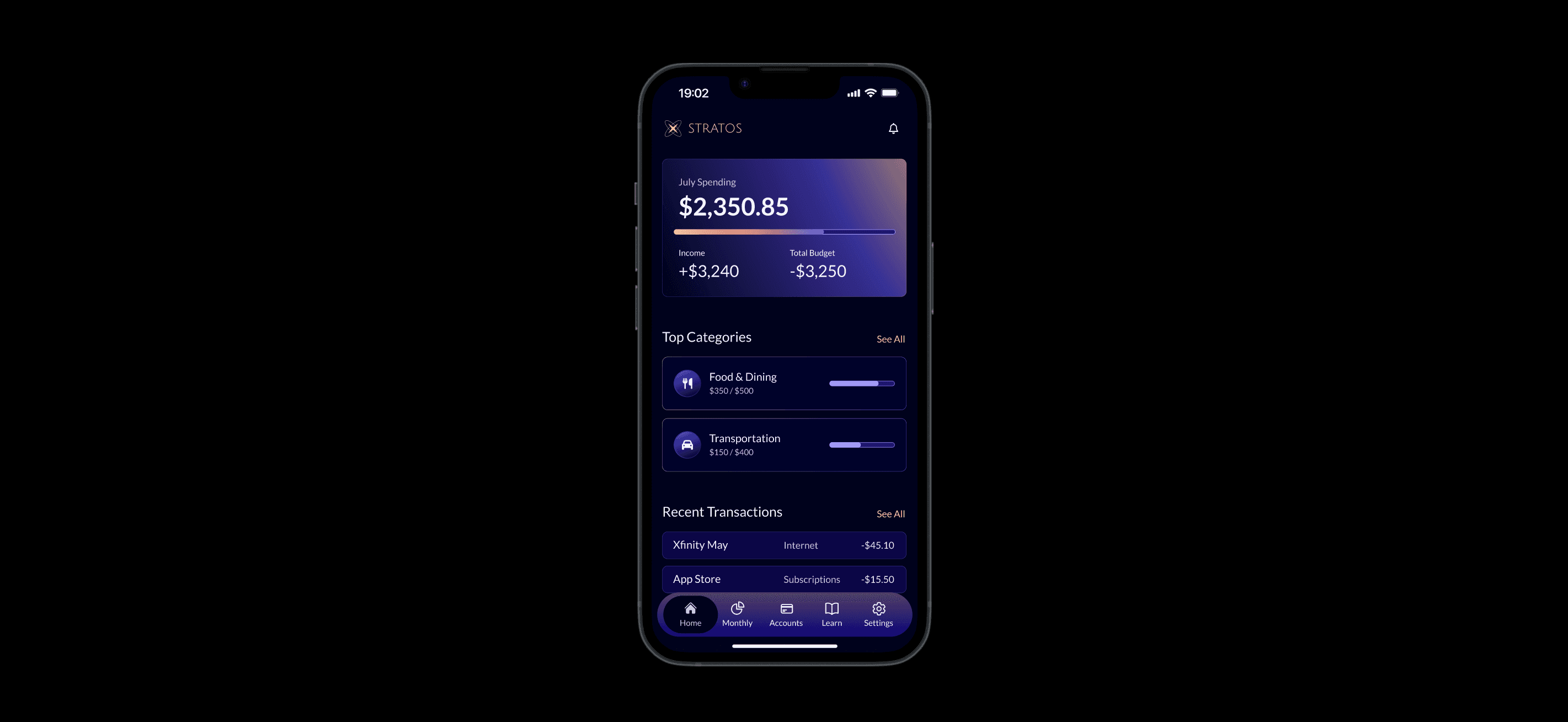
Stratos, a personalized budgeting solution designed to make financial management feel less overwhelming and more intuitive.
Category
Fintech, Product Design
Year
2025
Role
Mobile UX
Introduction
In the wake of Mint’s shutdown in 2023, a wave of frustrated users were left without a free, easy-to-use budgeting app.
Most alternatives felt too complex, too manual, or too expensive.
Stratos was created as a response to that vacuum, a personalized budgeting solution designed to make financial management feel less overwhelming and more intuitive.
Finance is deeply emotional. Without the right tools, users feel stressed, disempowered, or stuck. Stratos aimed to simplify, personalize, and support users in every step of their financial journey.
Problems
People need a simplified, integrated, and emotionally supportive budgeting experience that fits seamlessly into their daily lives.
Many people are struggling to manage their finances effectively, relying on spreadsheets, outdated tools, or juggling multiple disconnected apps. Others have stopped budgeting entirely, frustrated by the lack of simple, cohesive solutions.
Key Problems:
Many platforms are either too complex or too limited, creating frustration and abandonment.
Manual categorization and data entry make budgeting feel tedious and time-consuming.
Tools often lack emotional support, focusing on numbers rather than confidence and motivation.
There is no unified view of financial health, making it difficult to understand the big picture.
Competitors
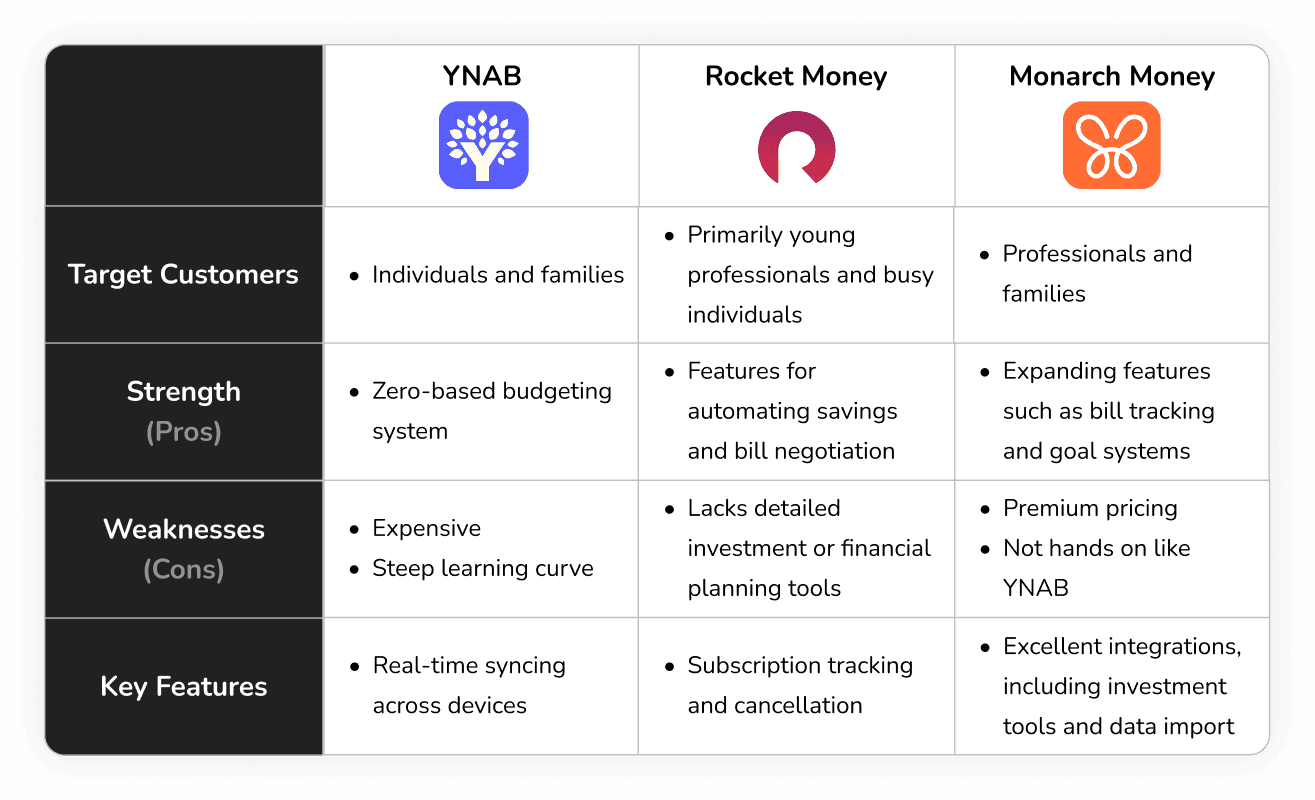
A competitive analysis was conducted to better understand the strengths and gaps of leading budgeting tools including YNAB, Rocket Money, Simplifi, Quicken, and PocketGuard.
Each platform was evaluated across key criteria such as ease of use, customization, automation, account syncing, and support for long-term goals.
YNAB offered strong financial planning but had a steep learning curve; Rocket Money excelled at subscription tracking but lacked personalization. Monarch is feature-rich yet often overwhelming.
Insights from this analysis informed the gaps that users explained in their interviews.
Research
Many expressed feeling overwhelmed by existing apps, either due to excessive complexity or lack of functionality.
User interviews were conducted with five participants from diverse financial backgrounds to understand their current budgeting habits, frustrations, and goals. These conversations revealed a common desire for automation, balanced with the need to manually override miscategorized expenses.
Customization emerged as a top priority, with users wanting to define their own budgeting style, rules, and categories. Many expressed feeling overwhelmed by existing apps, either due to excessive complexity or lack of functionality, and highlighted the emotional weight tied to reaching financial goals. These insights led to clear design opportunities: streamline transaction categorization, offer customizable tools and goals, create a holistic financial overview, and design an interface that feels calm and empowering rather than clinical or overwhelming.
Customization is critical, users want to define their budgeting style
Overwhelm is real: most apps have too much, or not enough
Users are emotionally attached to financial goals and feel empowered when they’re met
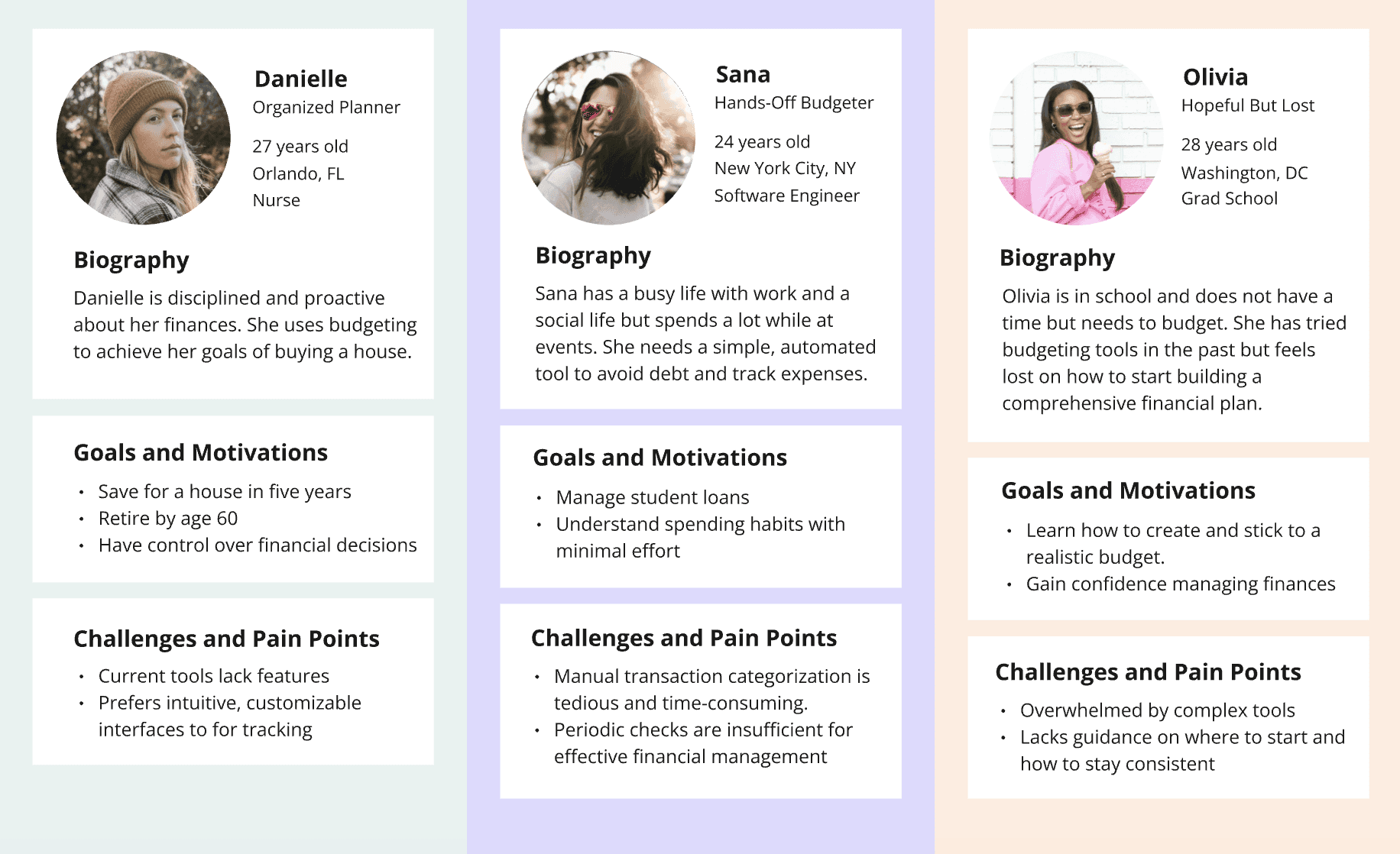
Personas
Three core personas were developed to reflect the spectrum of budgeting attitudes and needs uncovered during research.
The Starter (Hopeful but lost): Needs structure and encouragement
The Hands off Budgeter: Wants to feel peace while budgeting, understands how to do it, but doesn’t want it to feel like a chore
The Organized Planner: Loves control and rule-building, has lots of experience
These personas represent users who are hopeful but uncertain, confident but disengaged, and experienced but control-oriented, respectively.
Synthesis
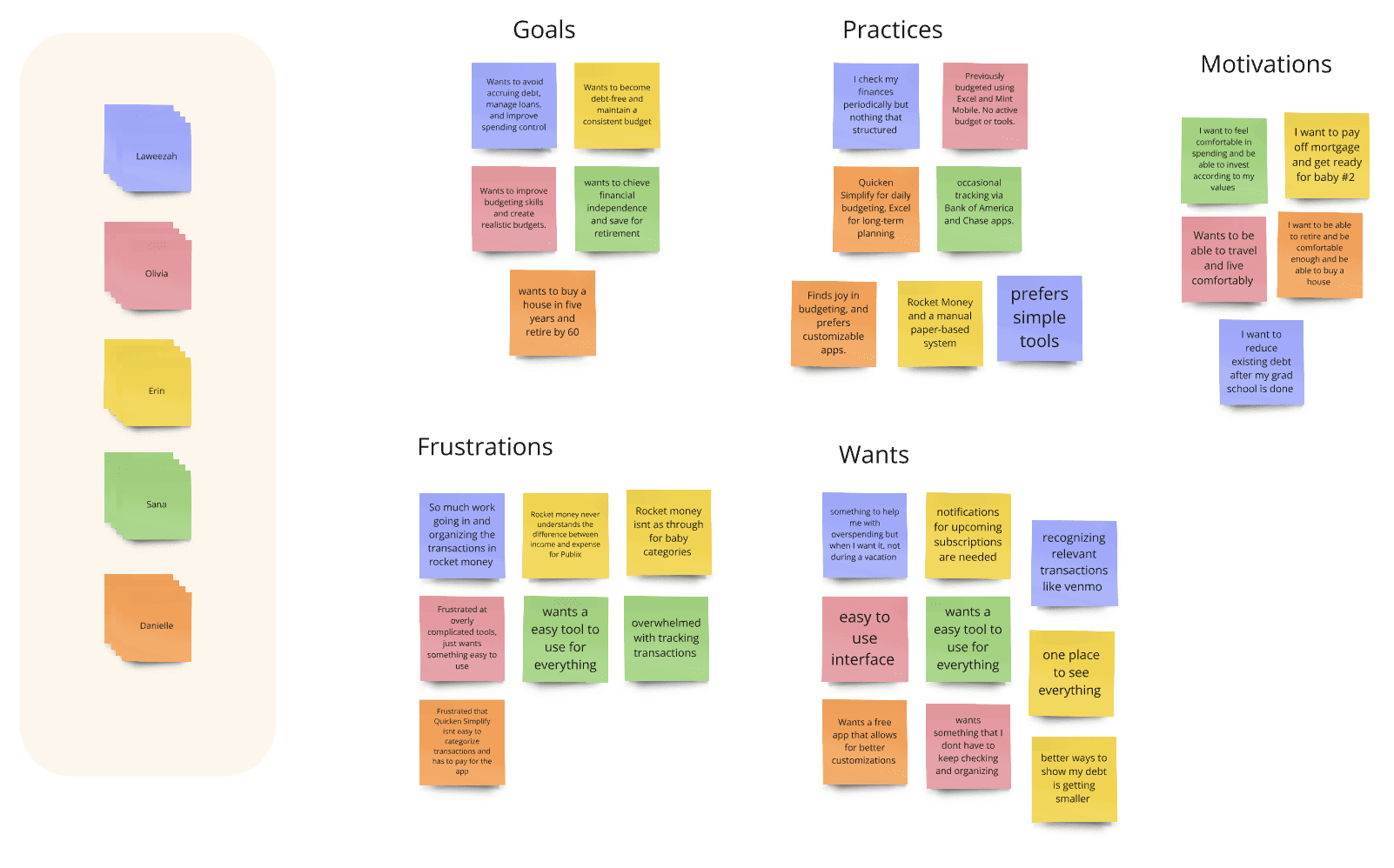
An affinity mapping exercise was conducted to synthesize insights from user interviews, revealing clear patterns in financial behaviors, frustrations, and emotional needs.
Participants consistently expressed a desire for greater customization, citing that existing apps felt either “too robotic” or “too restrictive.” One user, reflecting the mindset of The Hands-Off Budgeter, mentioned, “I want to know my money’s okay without having to check every day.” Another, embodying The Organized Planner, said, “I like rules, but I want to be the one setting them.” These perspectives highlighted a balance between structure and flexibility that users sought in a budgeting tool.
The affinity map also uncovered the emotional connection users have to their financial goals, such as paying off debt, saving for a home, or reaching financial independence. Many users described feeling overwhelmed by overly complex interfaces and discouraged when budgeting felt like a chore, reinforcing the need for a system that’s both functional and emotionally supportive.
How Might We
These findings directly informed the project’s “How Might We” statements, which guided the design direction:
How might we automate and streamline expense categorization to save users time and reduce frustration?
How might we create an all-in-one platform that combines budgeting, debt tracking, and investment monitoring?
How might we make budgeting tools more customizable to fit individual financial goals and habits?
Ultimately, the synthesis confirmed that budgeting is not just a logical process but an emotional one, users crave reassurance, autonomy, and simplicity. These insights shaped Stratos into a tool that adapts to each user’s level of comfort and financial confidence, creating an experience that feels calm, personal, and empowering.
Sitemap
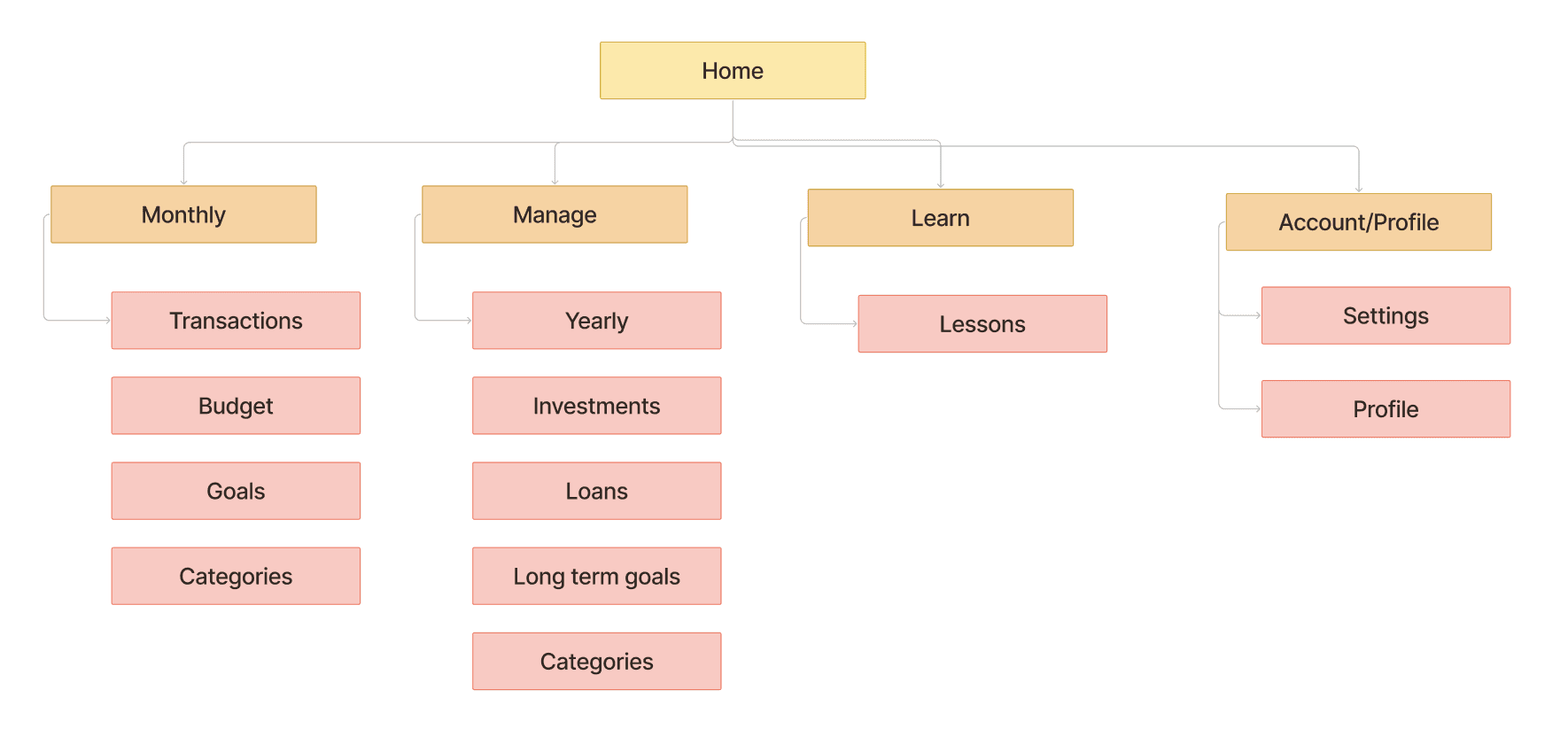
The sitemap balances simplicity with depth, ensuring users can easily navigate everyday tasks while exploring advanced financial features as their confidence grows.
The sitemap for Stratos was designed to provide a clear, intuitive hierarchy that supports both quick navigation and deeper financial exploration. Core pages include Home, Accounts, Monthly, Transactions, Learn, and Settings, each serving a specific role in helping users manage, understand, and grow their finances.
The Home page acts as the central hub, surfacing key insights like current balance, spending summaries, and progress toward goals, while Accounts and Monthly provide focused views for detailed tracking. The Learn section integrates educational content directly into the budgeting experience, and Settings allows for personal customization, data control, and connection management.
This structure was intentionally designed to reflect different user needs, from The Starter seeking clarity to The Organized Planner managing complex financial systems.
Task Flow
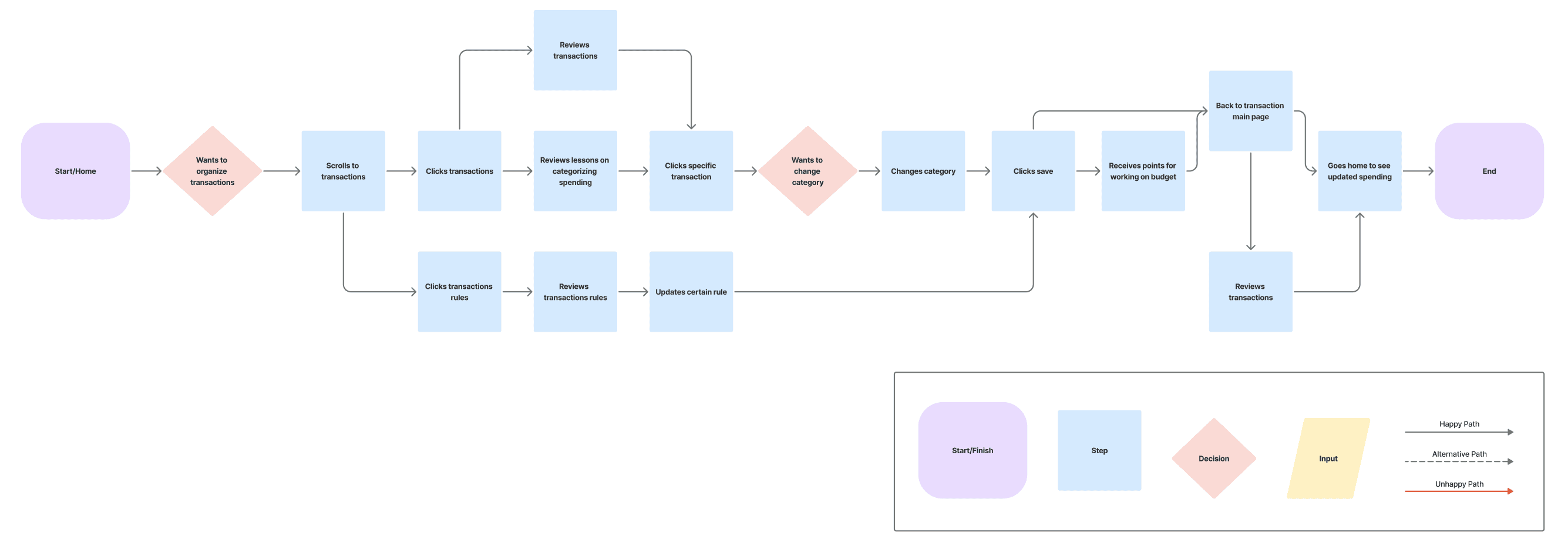
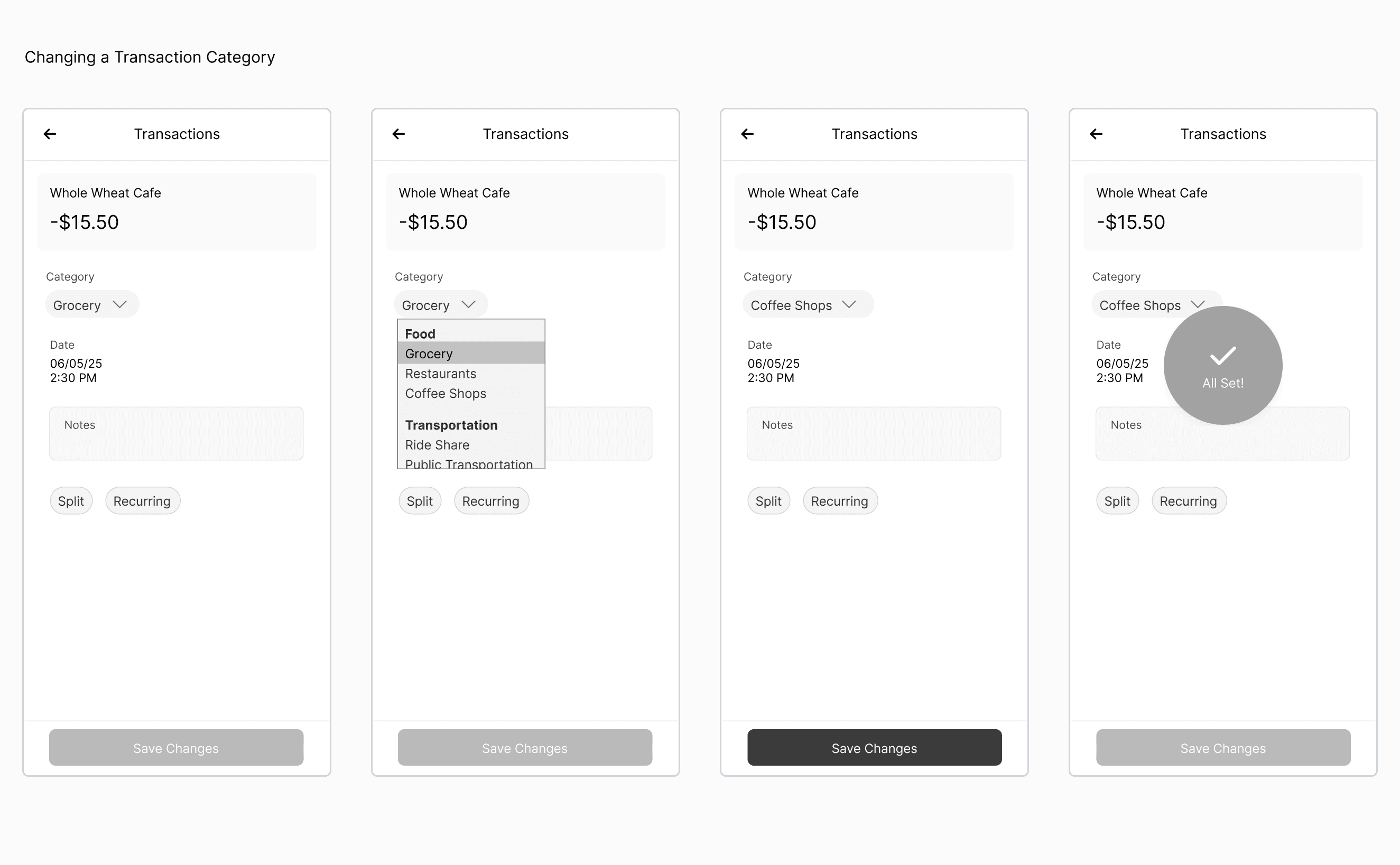
Task flows were mapped for the primary use case of changing a transaction category.
Core design assets included a feature prioritization grid using the MoSCoW method, which was used to strategically scope the MVP. This grid helped define which features were must-haves (such as transaction tagging and budget styles), should-haves (like goal-setting and reminders), and what could be deferred.
This flow formed the foundation for the navigation structure and user testing plan, ensuring each interaction aligned with user needs uncovered during research.
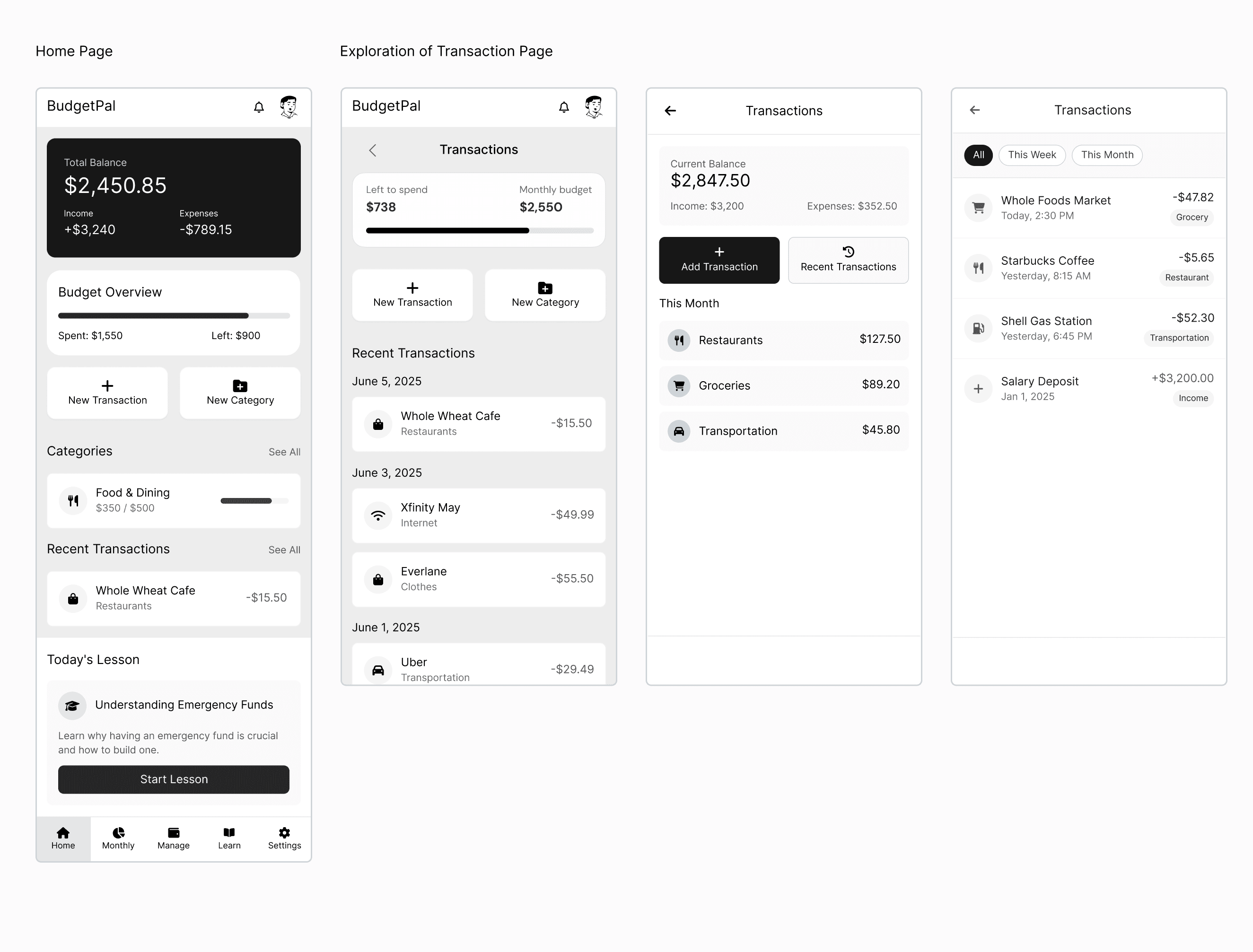
Lo-FI
Designing for finance is not just about features; it's about how users feel while using them.
Starting with low-fidelity wireframes, I mapped task flows for the top use cases, changing a category, toggling bank views, reviewing progress, and accessing budgeting education.
All flows were built mobile-first in Figma with accessibility and modularity in mind.
Balancing automation and user control was a constant design tension. Too much automation broke trust, while too little caused fatigue. I learned to test early and often, not just usability, but emotional impact.
Branding
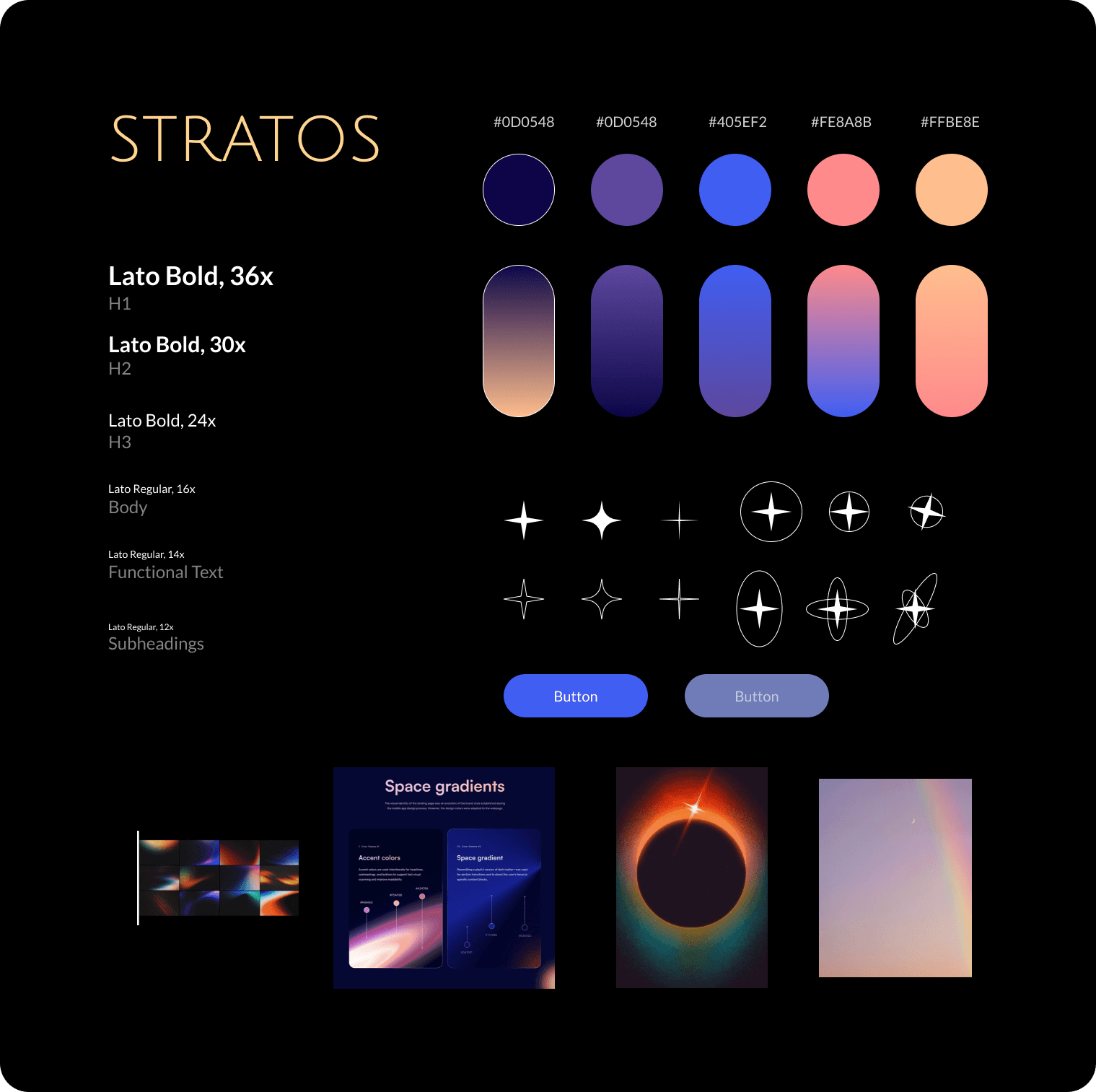
The brand draws inspiration from the motif of space and exploration, symbolizing personal growth, forward momentum, and the vast possibilities of financial independence.
Stratos was designed to reimagine budgeting as a calming, empowering experience, a clear departure from the anxiety or rigidity often associated with financial tools.
The visual language features soft gradients, rounded UI elements, and a balanced color palette of lavender, navy blue, and baby pink, chosen intentionally to convey calm, trust, and warmth. This metaphor reflects users’ journeys toward clarity and control, rather than perfection or pressure.
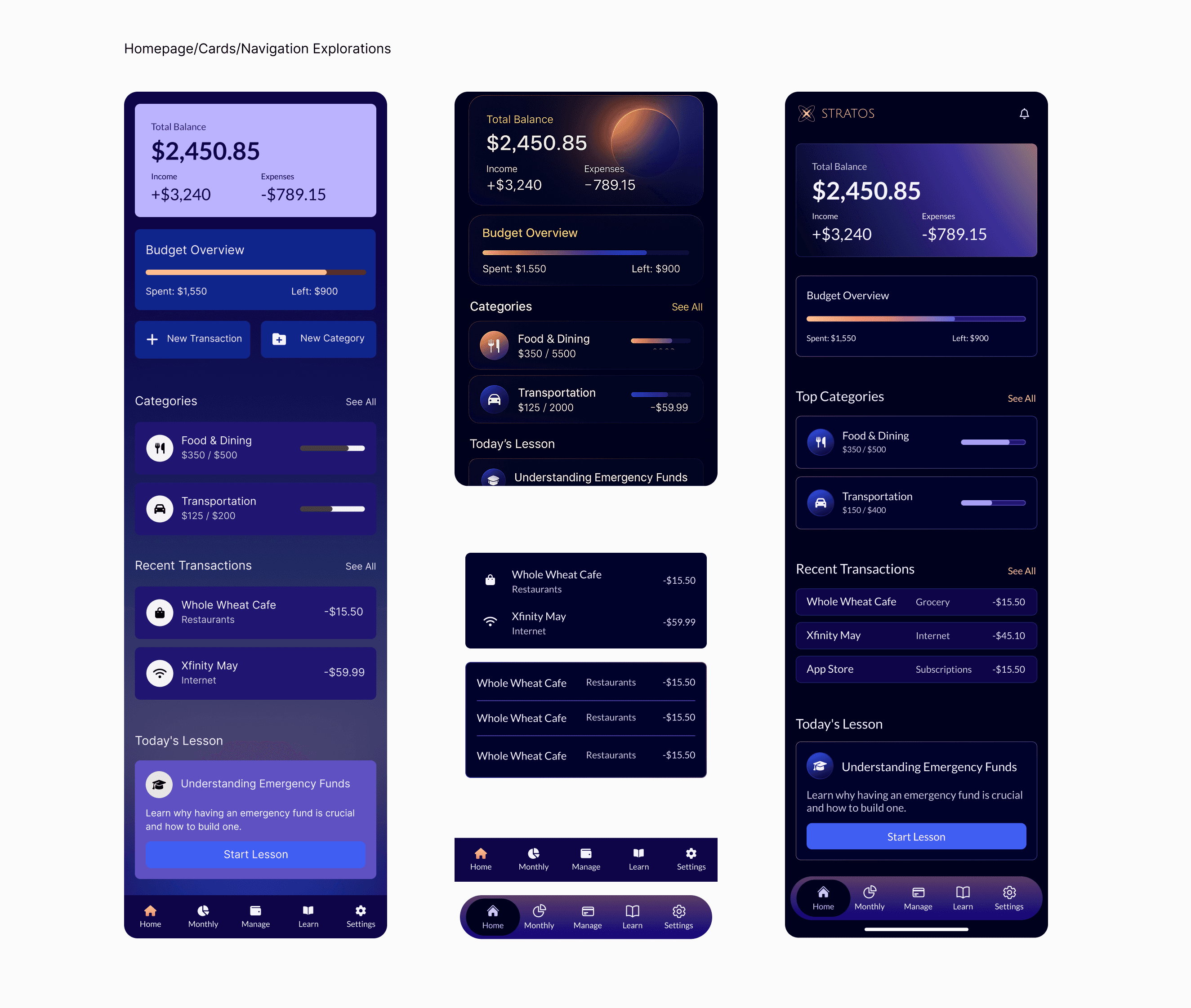
UI Exploration
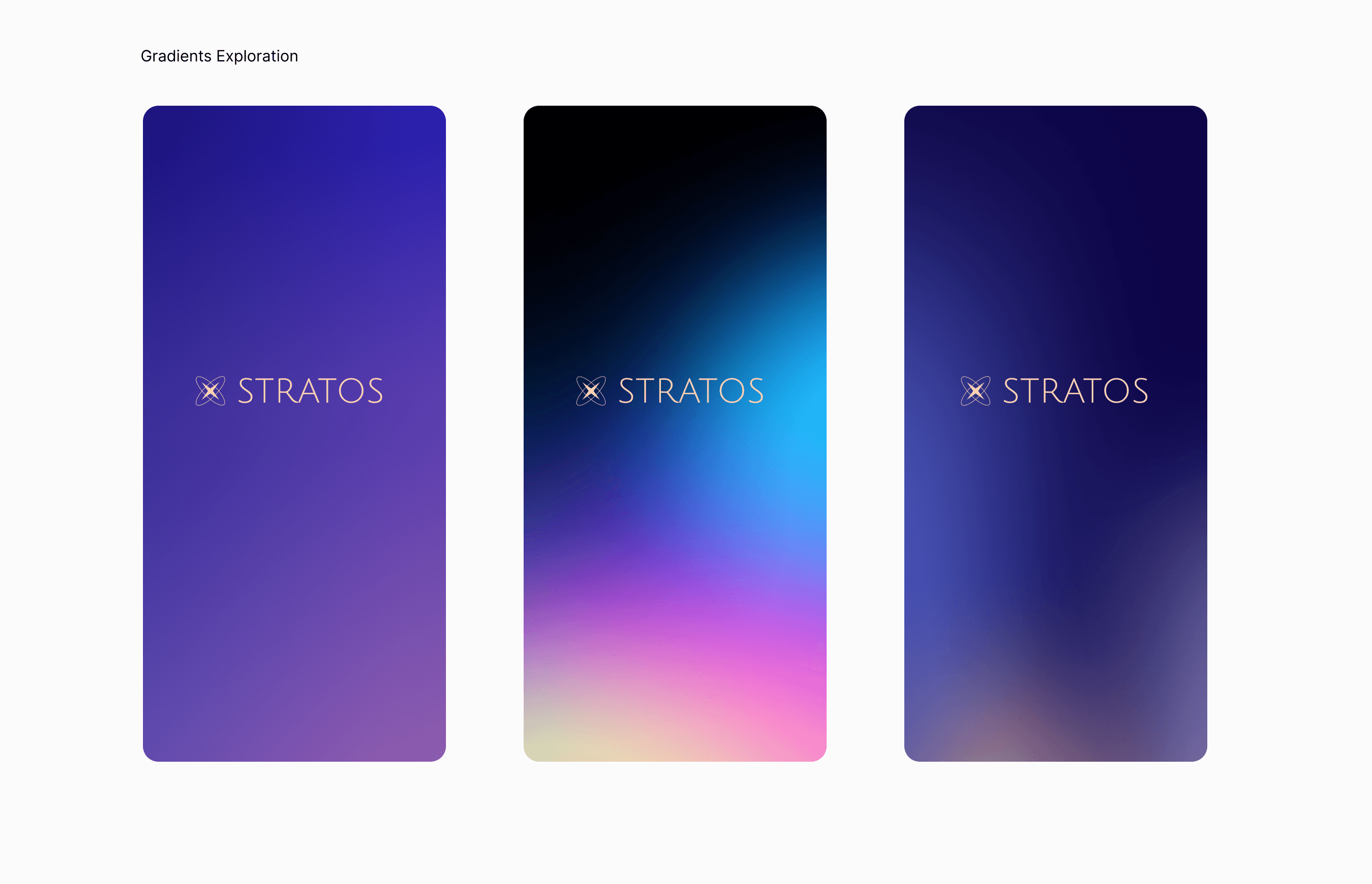
Stratos’ UI brings together calm visuals and purposeful structure to make financial management feel approachable and empowering.
The visual design of Stratos evolved through deliberate exploration of gradients, card structures, and navigation patterns to create an experience that feels calm, trustworthy, and uplifting. Early gradient studies helped define the brand’s atmospheric aesthetic, soft lavender-to-navy blends and subtle pink accents that signal ease and emotional reassurance.
Key screens, such as the homepage and budget overview card, went through multiple iterations to balance clarity with visual warmth; the redesigned budget card in particular shifted toward a cleaner hierarchy, rounded edges, and refined contrast to help users quickly understand their spending without feeling overwhelmed.
The bottom navigation also received focused attention, exploring icon weights, spacing, and motion to reinforce predictability and reduce cognitive load. Overall, the final visual system reflects a thoughtful blend of simplicity, personality, and emotional grounding.
UI Kit
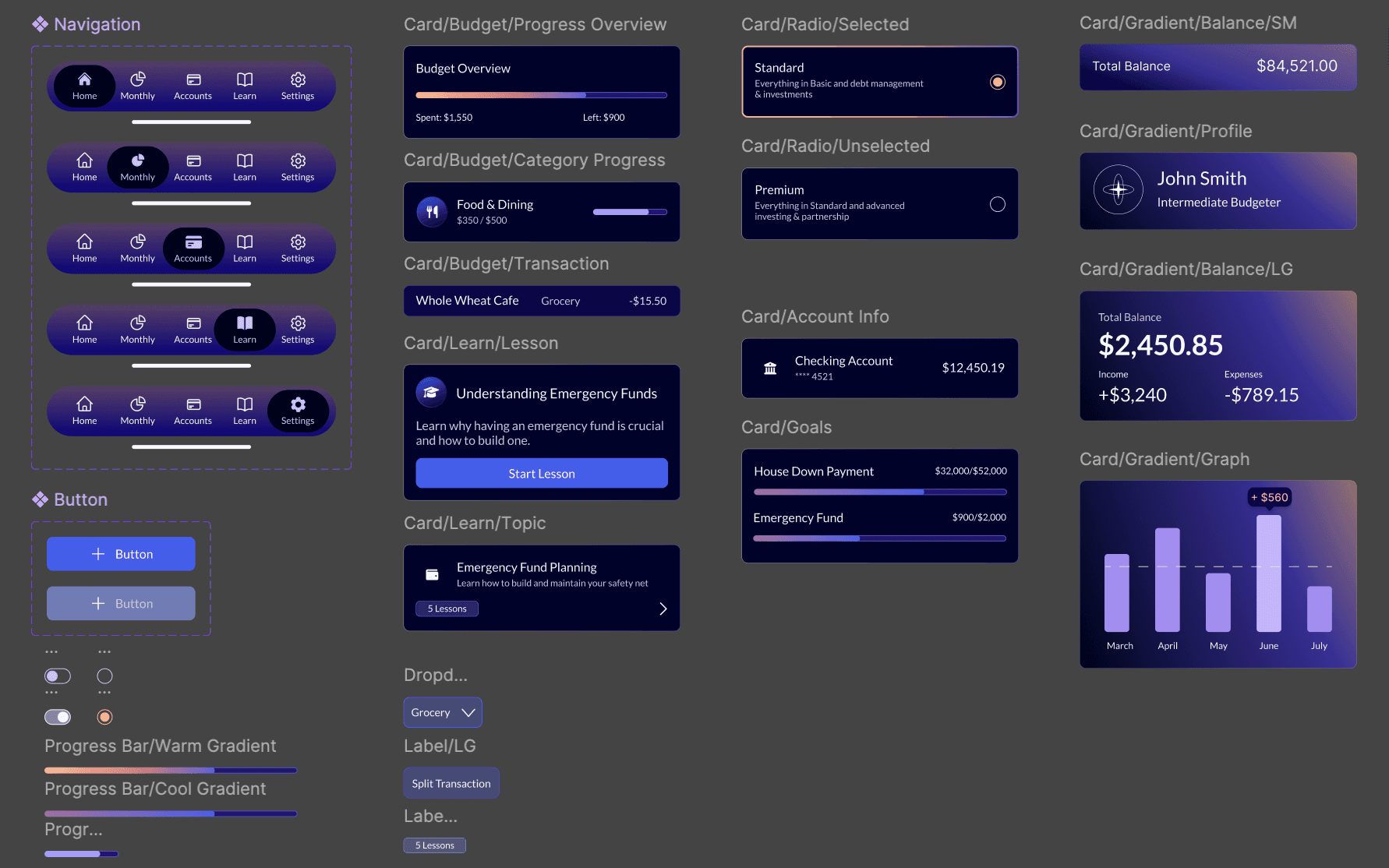
The UI Kit creates a reliable visual foundation that keeps Stratos intuitive, consistent, and easy to build upon.
The Stratos UI Kit consolidates all foundational interface elements into a clear, organized system that supports consistency across the entire product. Core components, such as card designs, bottom navigation, buttons, and gradient progress bars, are carefully structured and labeled to ensure they can be applied seamlessly across screens and flows.
Each element reflects the app’s visual language, combining rounded edges, soft gradients, and calming colors with functional clarity. The progress bars, in particular, were designed to blend aesthetic appeal with precise readability, reinforcing the brand’s balance of emotional ease and financial insight. Together, these pieces form a cohesive design toolkit that makes future iterations efficient and scalable.
HiFi Designs
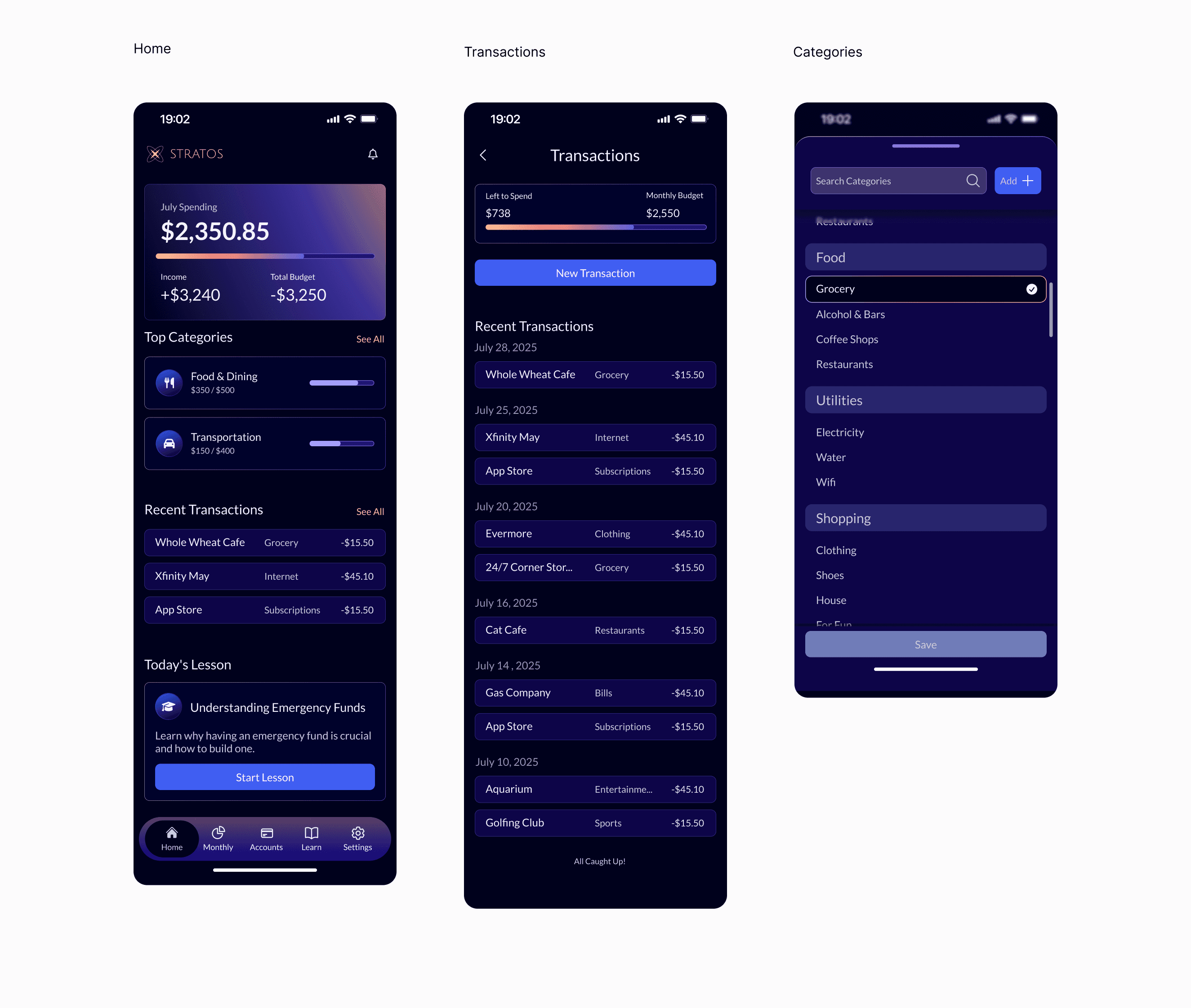
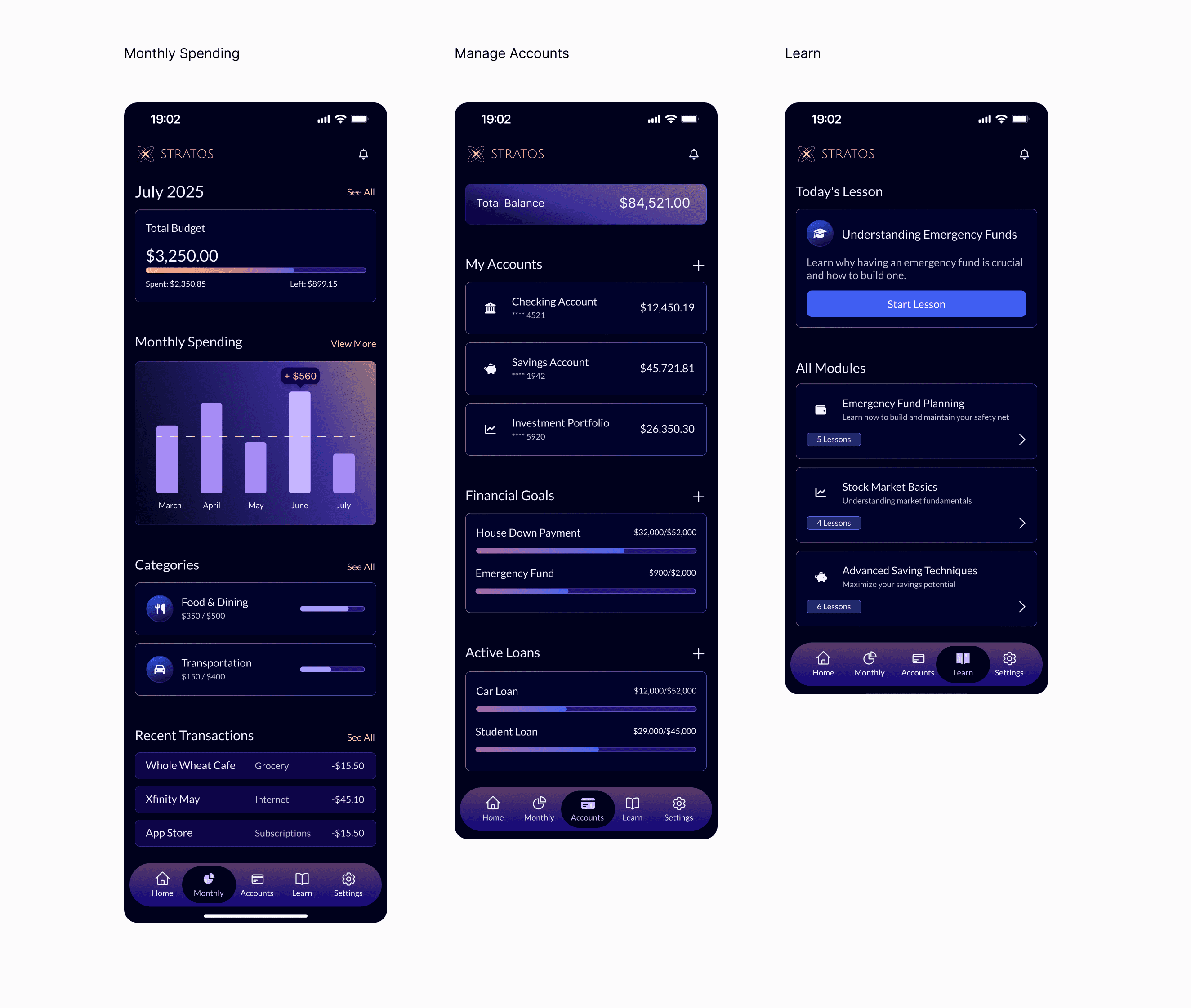
The high-fidelity designs solidify Stratos’ vision by turning detailed flows and thoughtful iteration into a cohesive, intuitive, and emotionally supportive budgeting experience.
The high-fidelity mockups for Stratos showcase a refined, fully developed visual system that brings the product’s core financial tools to life across key screens such as Home, Transactions, Monthly Spending, Manage Accounts, and the Learning page.
The Home screen and Monthly Spending view were especially critical, evolving to present budget health and progress at a glance while preserving a sense of emotional ease; redesigned budget cards, simplified progress visuals, and clear labeling all contributed to a more approachable experience.
The Transactions and Categories screens highlight the app’s flexible tagging system, incorporating rule-based categorization with manual overrides, a complex concept communicated through clean layouts, purposeful spacing, and microcopy that reduces friction.
HiFi Designs
Each screen went through iterations to ensure content clarity, intuitive hierarchy, and strong alignment with the app’s calming brand direction.
Goal cards, showcased in the Manage Accounts, received particular attention to balance motivational feedback with practical detail. Across all mockups, thoughtful annotations, polished UI elements, and consistent interaction patterns ensured that each wireframe effectively supported user testing and validated the core flows.
Usablilty Testing
Usability testing confirmed core flows were intuitive while also identifying navigation clarity and information hierarchy as critical areas for improvement.
The usability testing phase for Stratos involved three core tasks, changing a transaction category, checking the monthly budget, and adjusting notification settings, completed by five participants who represented the app’s key user types. Results showed strong usability across foundational interactions: users easily changed categories, expressed enthusiasm for the clarity of the monthly budget bar graph, and navigated the Settings page without friction.
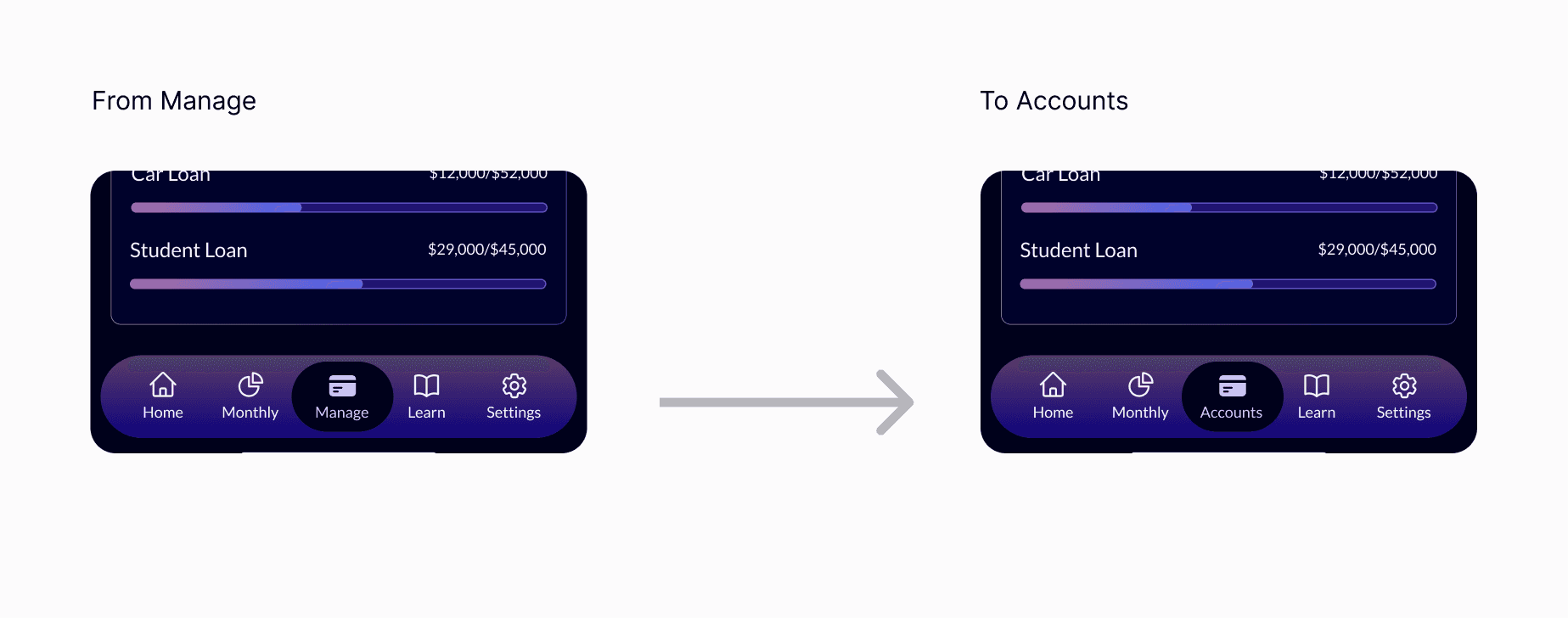
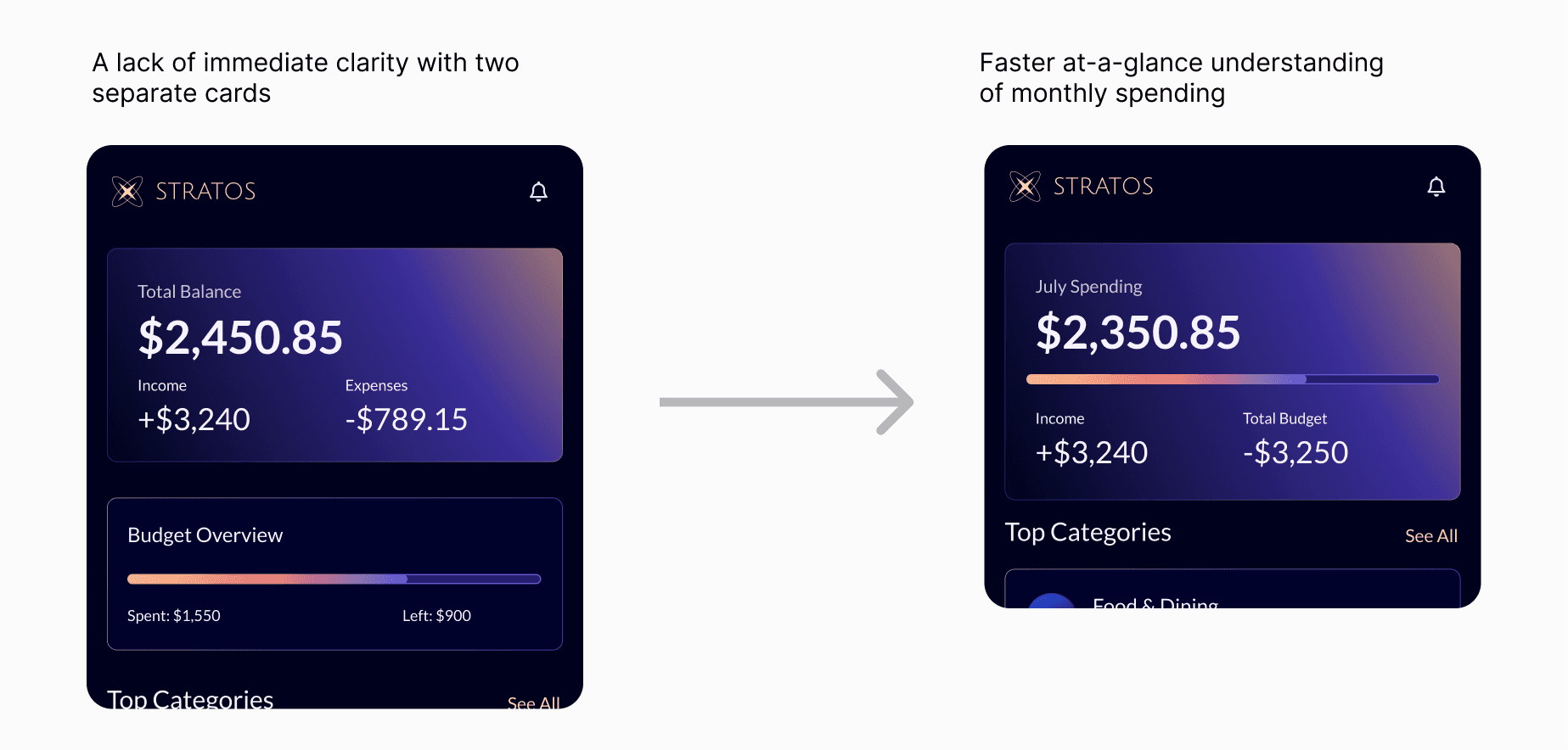
However, usability gaps emerged, including confusion around the “Manage” tab label, which many testers mistook for app settings rather than account management, leading to its renaming as “Accounts” to better match user expectations. Feedback on the homepage budget card also revealed a lack of immediate clarity, prompting a redesign with stronger visual hierarchy and contextual cues to support faster at-a-glance understanding of monthly spending.
Revisions
Clarified Navigation Labels from “Manage” to “Accounts”
Users expressed confusion about what the “Manage” tab contained, often expecting account settings rather than a breakdown of financial accounts.
To reduce ambiguity and improve first-click accuracy, the tab was renamed to “Accounts”, making it immediately clear that users would find bank and credit card details there. This small change improved navigational clarity and aligned better with mental models observed during testing.
Revisions
Redesigned Budget Card for Clearer Spending Overview
The homepage budget card was redesigned to provide a more immediate and visual understanding of monthly spending. Testers found the original version confusing and lacking a clear snapshot of progress.
The updated card now includes clear context making it easier to see where users stand at a glance for that month and encouraging ongoing engagement with their budget.
Summary
Stratos fills the gap left by Mint with a design that is emotionally aware, customizable, and intuitive, giving users more than just tools, but a renewed sense of clarity and confidence.
The biggest design challenge was balancing automation with control; leaning too far in either direction created friction or broke user trust. Along the way, I learned that people budget emotionally as much as they do logically, and that simplicity isn’t about minimalism, it’s about meaningful prioritization.
Moving forward, I plan to expand Stratos into a web platform, introduce shared budgeting for households, and test with a broader demographic, including older adults and freelancers. I'm most proud of creating something that made users feel genuinely hopeful about their financial future.