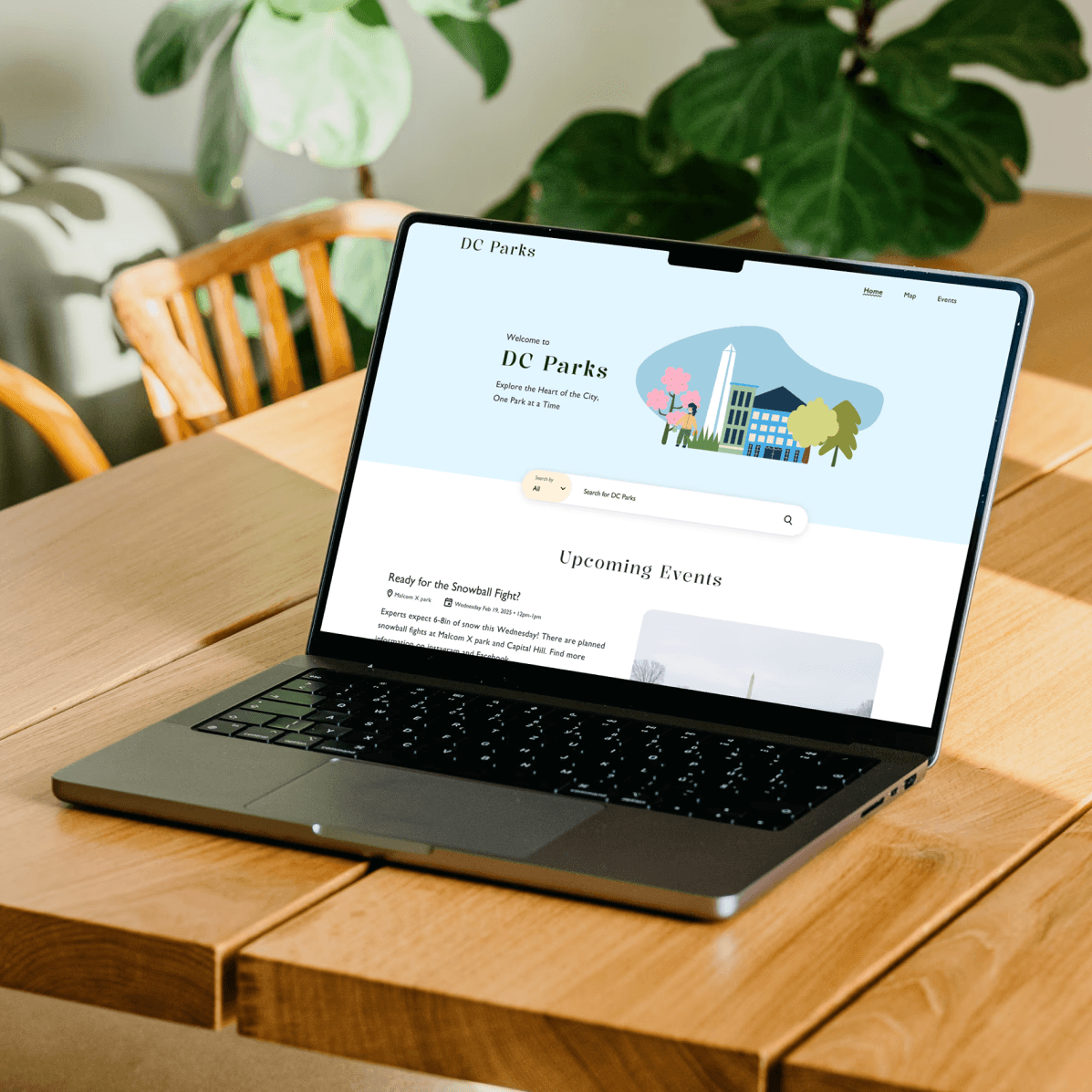
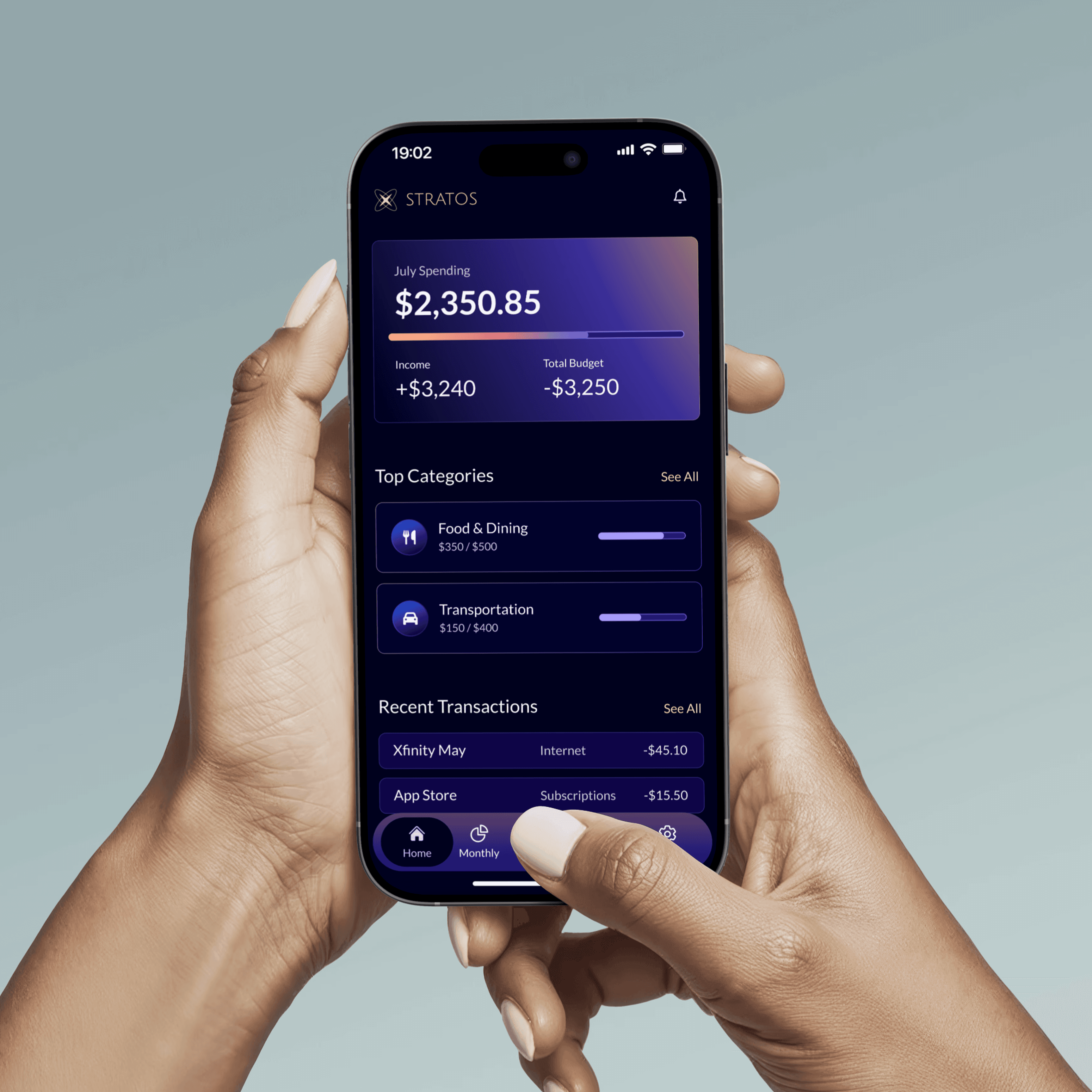
With ghosting still a problem for even online friendships, Bumble BFF events allow users to connect through events.
Category
Add a Feature
Year
2025
Role
Research, UX, UI
Introduction
For many Bumble BFF users, the hardest part of making friends isn’t starting a chat, it’s making the leap to meet in real life.
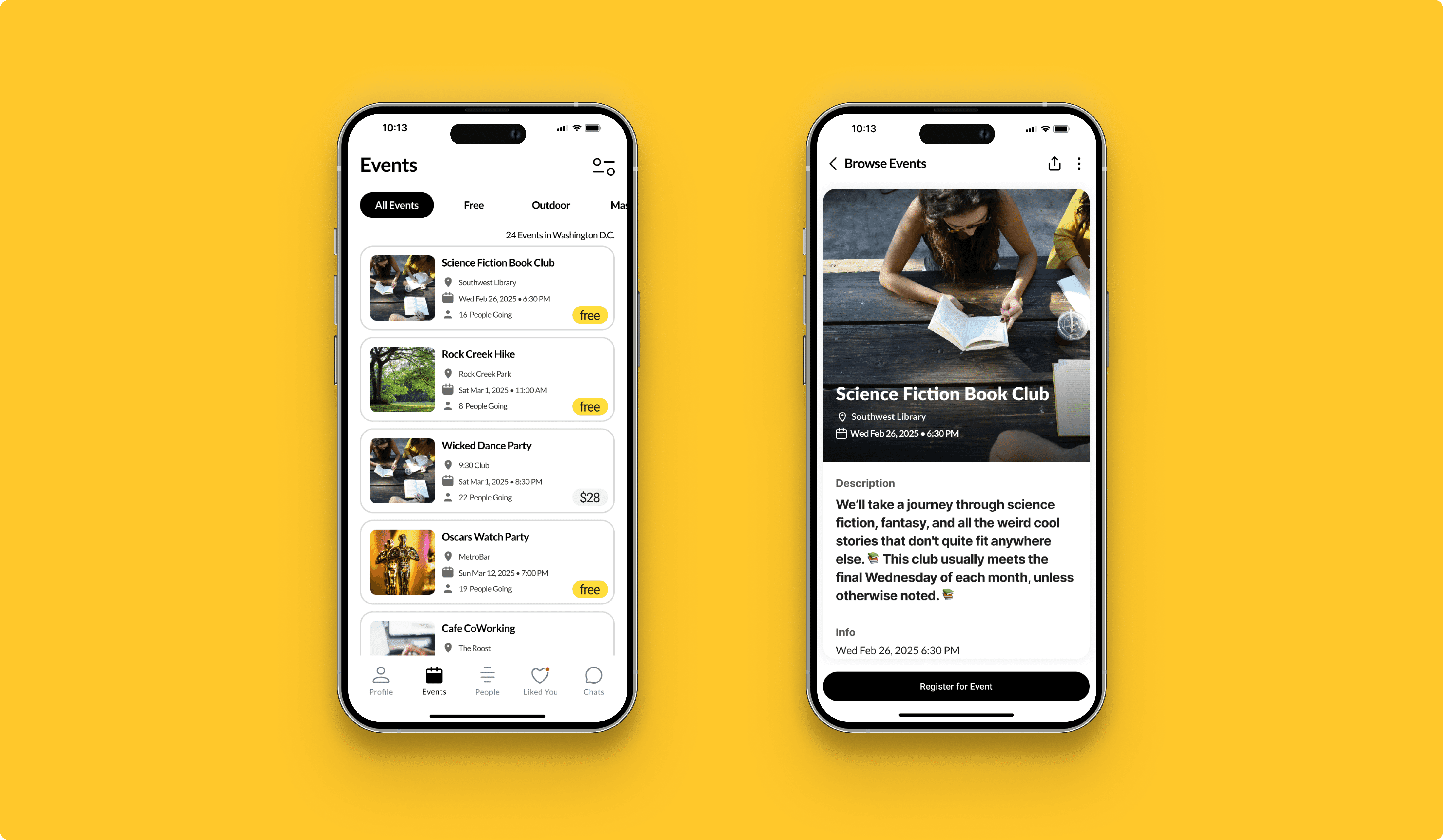
The Event Matching feature bridges that gap by letting users discover local events, register, and instantly match with other attendees. This makes it easier to create shared experiences that build lasting friendships.
Designed for newcomers to a city, solo event-goers, and anyone looking to connect through activities they love, the feature combines Bumble BFF’s people-first approach with the social utility of platforms like Meetup, but without the planning stress.
Problems
Bumble BFF users struggle not because they lack interest in meeting, but because the process feels awkward, inconvenient, and unsupported.
Many Bumble BFF users want to build real friendships, but the transition from chatting online to meeting in person often breaks down. Despite good intentions, users run into practical, social, and safety-related barriers that make offline connection difficult and discourage follow-through.
Users experience several key obstacles when trying to meet in person:
Awkward group meetups with little shared context or unclear expectations.
Logistical barriers like coordinating time, location, and activity that work for everyone.
Ghosting and drop-offs that happen between chatting in the app and committing to a meetup.
Limited discovery tools for finding events or activities that align with their interests.
Safety concerns about meeting new people offline without enough built-in safeguards.
Competitors
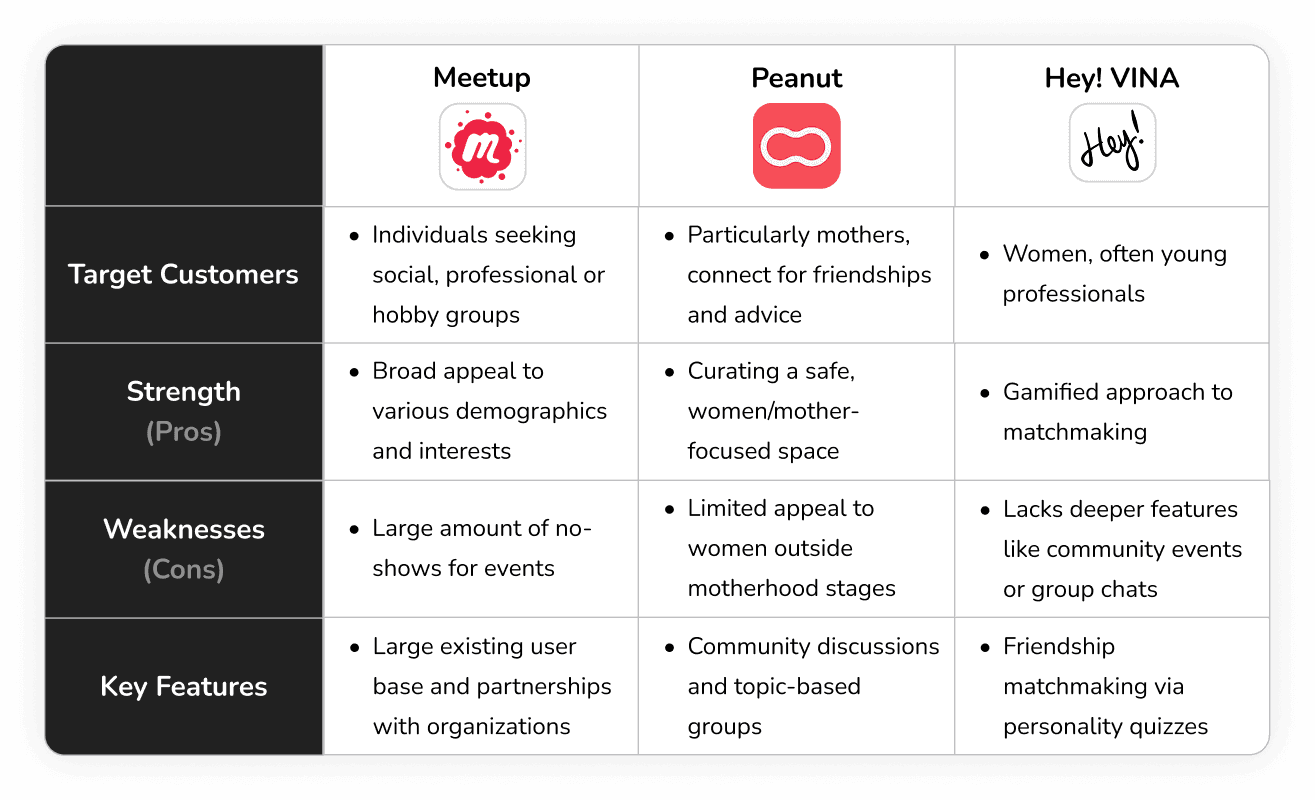
A competitive review was conducted across Peanut, Hey! VINA, and Meetup.com.
This allowed me to understand how Bumble BFF can better support users seeking in-person friendships.
The analysis focused on each platform’s core offerings, event-related features, onboarding flow, community-building tools, and strengths/weaknesses in fostering real-world social connection.
Research
Users want meaningful in-person friendships, but lack the structure, and planning tools needed to make those connections happen
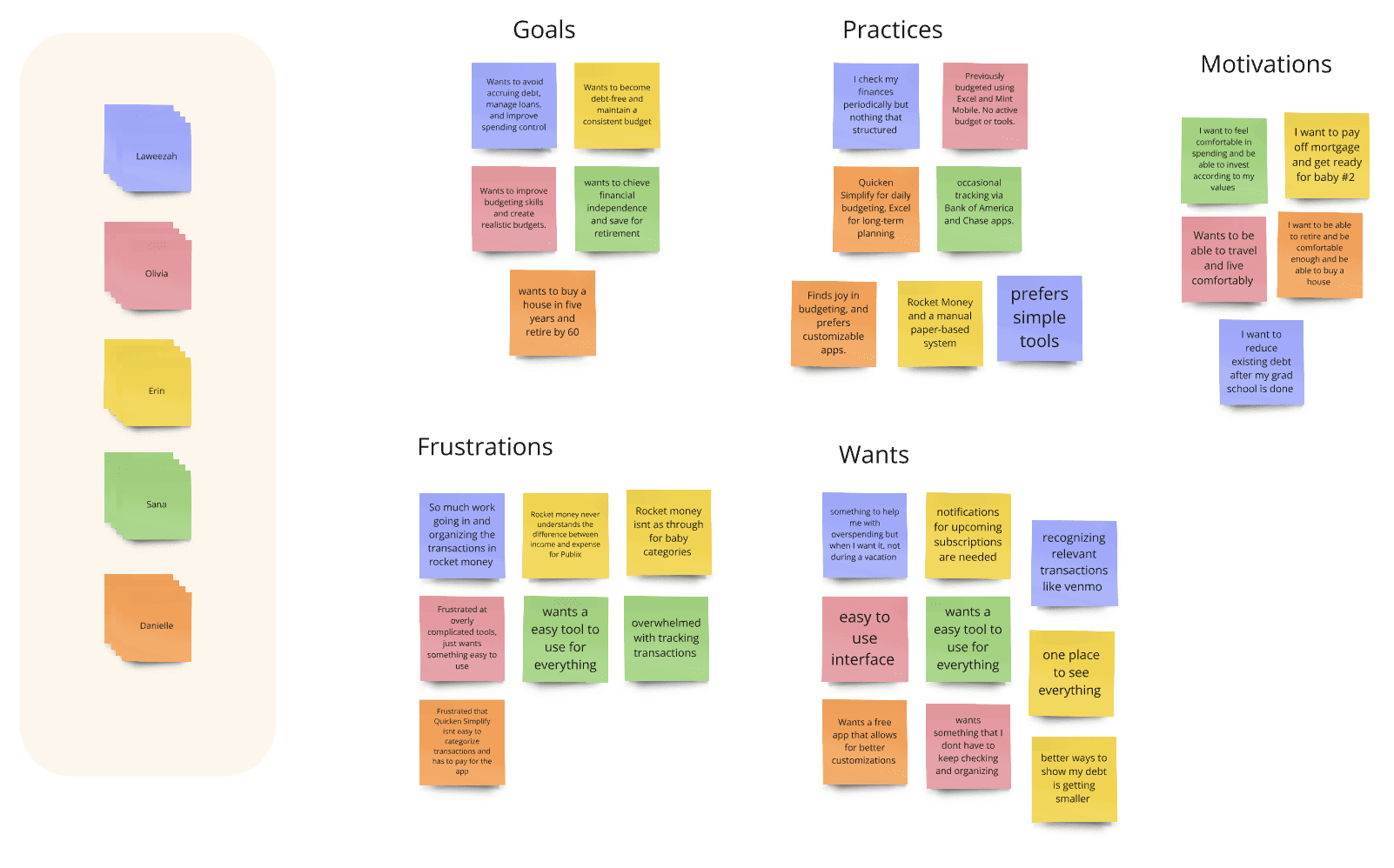
To understand how people form friendships on Bumble BFF and where the experience falls short, I conducted remote interviews with five participants ages 26–32. All five had used Bumble BFF before, and some had also used platforms like Meetup or Volo. The interviews explored motivations and challenges they experienced.
Participants highlighted the emotional difficulty of ghosting, the frustration of algorithmic biases, and the challenge of organizing plans in transient cities like DC.
Motivations center on finding meaningful friendships through low-pressure meetups
Ghosting, visibility issues, and planning logistics repeatedly block follow-through
Users want group activities, and simple group coordination tools
Synthesis
While the app supports one-on-one matching, participants described their real-world friendships emerging more naturally through shared experiences.
Synthesis of the interviews revealed a clear gap between how users want to form friendships and what Bumble BFF currently enables. While the app supports one-on-one matching, participants described their real-world friendships emerging more naturally through shared experiences, like hobby groups, casual events, or interest-based meetups. Without in-app tools, users were forced to rely on external platforms, juggling screenshots, Eventbrite links, and group chats that quickly became overwhelming or fizzled out.
Across conversations, users emphasized that events feel less awkward, offer built-in context, and remove the pressure of “performing” during one-on-one meetups. But the lack of structure created uncertainty: Which events are relevant? Who is going? Is it safe? Will people actually show up? This emotional friction, especially for users navigating new cities or trying to find community, revealed an opportunity for Bumble BFF to support the entire journey from discovery → coordination → connection → meetup.
Shared experiences feel like the most natural way to build friendships
Users consistently said friendships “stick” when they grow out of doing something together, not just chatting.Planning is the biggest barrier to making meetups happen
Participants described juggling links and group chats as “exhausting,” often leading to drop-offs.Safety and clarity matter, especially for women in new cities
Users wanted to know who would be at an event, what to expect, and whether it aligned with their comfort level.Events require more in-app support than the current product provides
Interest filters, attendee visibility, reminders, and lightweight group coordination were universal requests.
Lo-FI
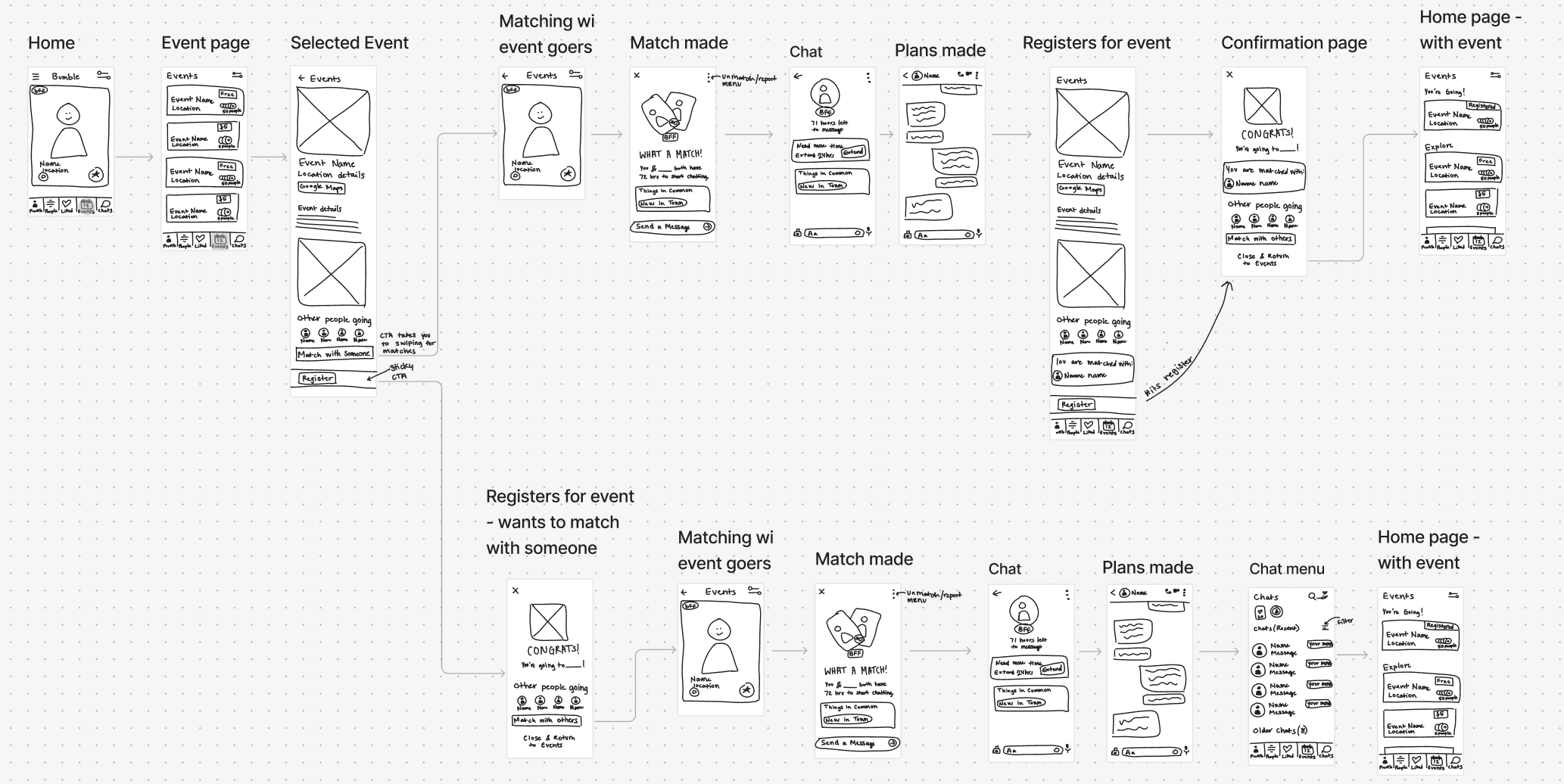
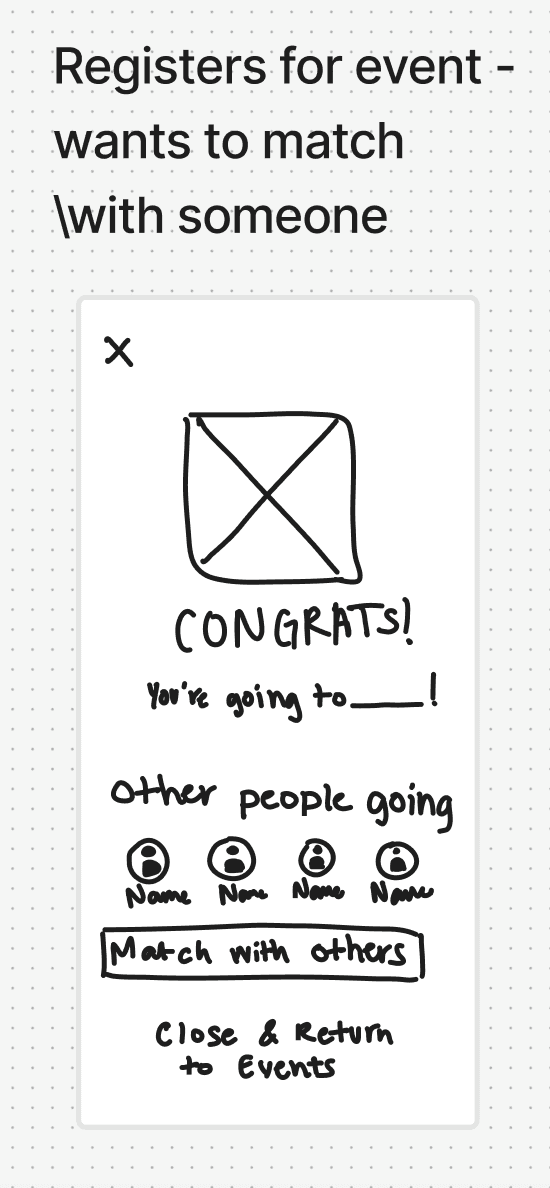
The wireframes established a clear, low-friction path from discovering an event to confidently meeting someone in person.
The core concept was a dynamic meetup flow that allowed user to find events and then match with event-goers. To support this, I mapped the entire experience from event discovery → registration → attendee matching → pre-event messaging, focusing on reducing friction and giving users clarity at each step.
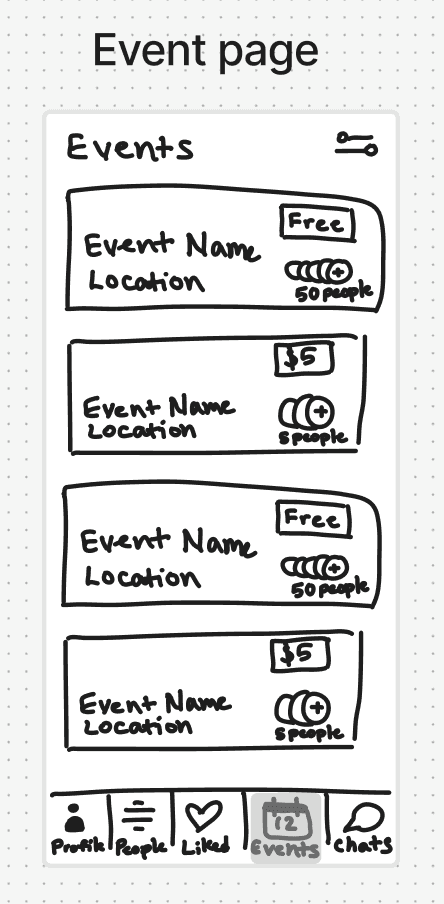
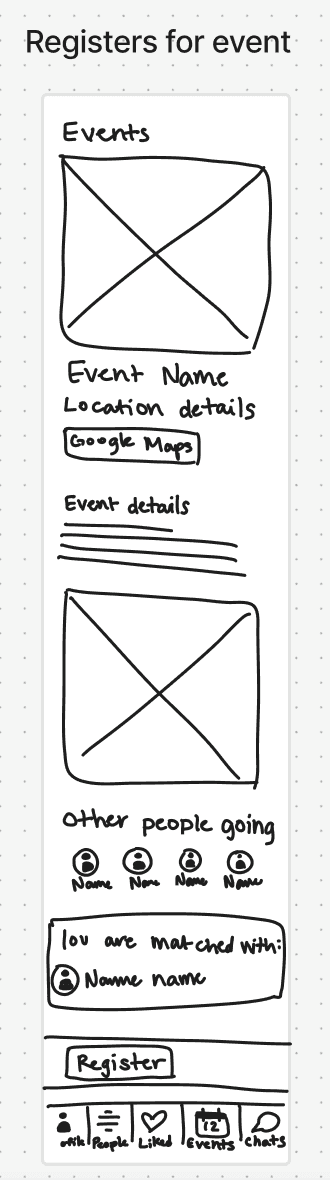
I explored multiple layout options through low-fidelity wireframes to test hierarchy, interaction patterns, and the pacing of the flow. These early iterations helped refine key decisions, like how users browse events, view details, see who’s attending, and move into a match.
Key considerations included:
Ensuring each screen clearly communicated its purpose and next step
Iterating on the event card layout to balance information and scannability
Designing a frictionless transition from attending an event to matching with other attendees
Providing intuitive spaces for pre-event messaging and coordination
Building enough screens to test the full end-to-end flow and validate usability
UI Exploration
The design extended Bumble BFF’s visual language while introducing a new navigation element and screen pattern built specifically for discovering and attending events.
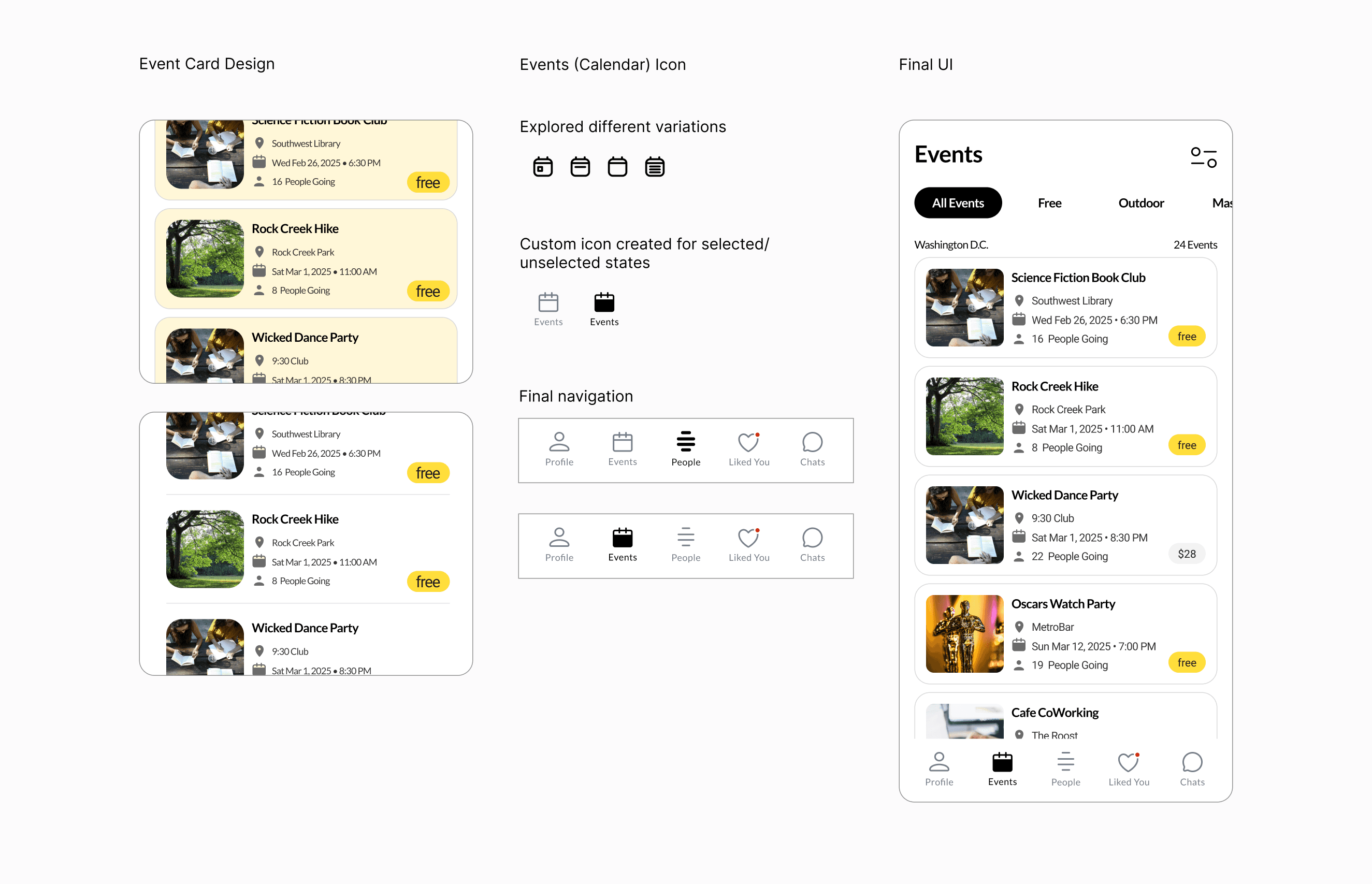
The event feature was designed to feel native to Bumble BFF’s friendly, welcoming brand while introducing an entirely new interaction pattern. I added a new Calendar menu item, complete with a custom icon, to serve as the visual anchor for event discovery. Since Bumble BFF had no comparable page type, I explored multiple layout directions to determine how an event feed, event details, and attendee previews should look within their existing system.
Visual decisions centered on clarity and warmth: clean typography, minimal surfaces, and bright accents that kept the focus on people rather than UI. Key screens, like the event feed, event details page, and attendee matching view, were iterated to balance hierarchy, scannability, and Bumble’s signature conversational feel.
Across these iterations, I refined spacing, card density, iconography, and micro-interactions to ensure the feature blended seamlessly with the existing app while still supporting a completely new use case.
HiFi Designs
The high-fidelity designs tied the full journey together, offering a polished, intuitive experience ready for usability testing.
Once the core structure was validated, I moved into high-fidelity mobile designs in Figma, shaping the visual hierarchy, navigation cues, and interaction details needed for a realistic, testable experience. These screens refined the earlier wireframes by clarifying information density, strengthening accessibility, and bringing Bumble’s warm, people-first aesthetic into the event flow.
The screens focused on three key moments:
Event Discovery Feed: Iterated to balance filters (cost, topic, location) with clean, scannable event cards so users could quickly compare options.
Event Detail Page: Designed with clear registration actions, essential event info, and attendee previews that gave users social context before committing.
Attendee Matching & Pre-Event Chat: Built to create a smooth, confidence-building handoff from attending an event to messaging a potential friend.
Across these screens, I refined spacing, card layouts, and visual cues to ensure every element had a clear purpose and supported users through the full flow, from finding an event to meeting someone in real life.


Usablilty Testing
User insights confirmed strong alignment with user needs while uncovering clear opportunities to enrich attendee visibility and strengthen social context.
Usability testing with five participants validated the event flow and revealed what users valued most. The calendar icon made event discovery effortless, and users relied heavily on cost and topic while choosing an event. Overall, the process felt quick and frictionless, though some wanted more event details before registering.
Qualitative feedback highlighted why the feature resonated: participants loved being able to message before meeting, appreciated the smooth progression from discovery to registration to match, and described the experience as “the best parts of Meetup and Bumble BFF combined.”
Revisions
Iterations strengthened clarity, social utility, and future scalability of the event flow.
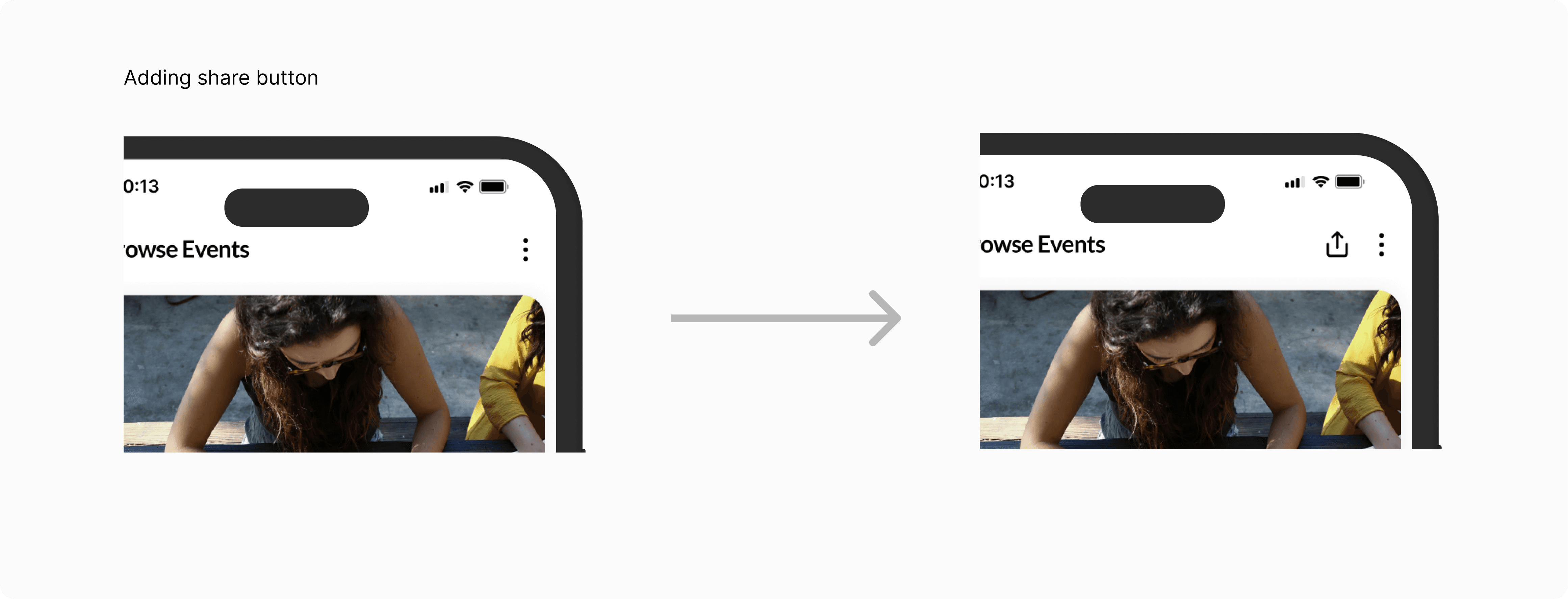
User feedback surfaced a few high-priority improvement areas. One major update was adding a sharing feature, allowing users to more easily send events to their current friends, a response to the strong desire for social coordination within the app.
Revisions
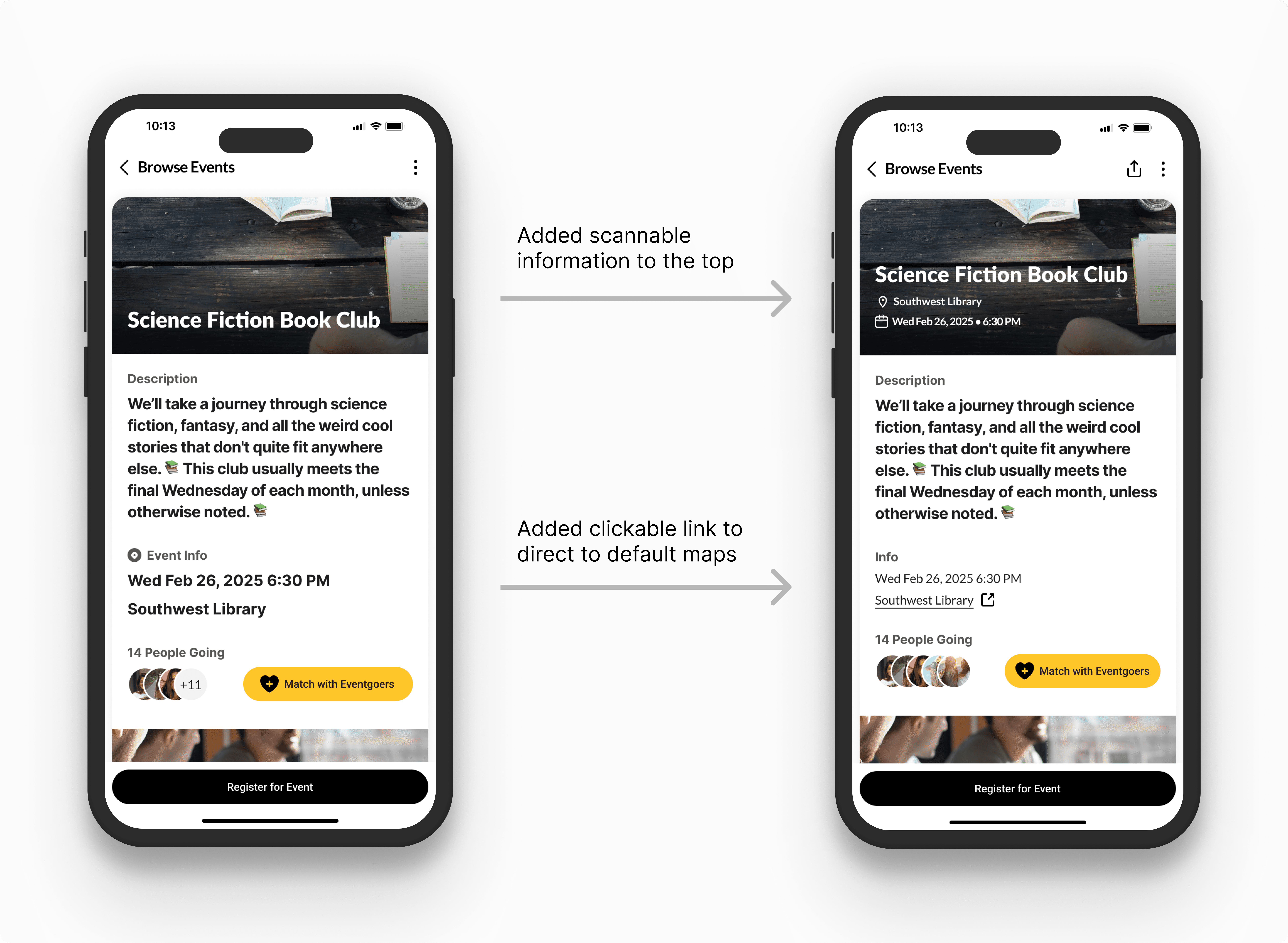
Users also mentioned the need to have skim-friendly event distance information on the event page, reducing cognitive load and helping users make faster decisions.
Looking ahead, users also expressed strong interest in group matching and group chat features, especially for those who prefer attending events with multiple people rather than one-on-one.
Based on these insights, I refined the designs to focus on the most impactful revisions first: clarifying event logistics at a glance, exploring lightweight sharing options, and documenting pathways for future group-based features. These updates aligned the experience more closely with how users naturally plan outings and build friendships.
Summary
This project affirmed my goal of building products that translate digital interactions into authentic, real-world friendships and highlighted how thoughtful social design can make that possible.
Seeing how naturally users understood the flow reinforced one of my biggest takeaways as a designer: when social context is built into the experience, not layered on top, people feel more confident initiating real-world connections. This project reminded me how important it is to design for belonging, not just interaction.
Looking back, I learned how pairing event discovery with attendee matching meaningfully reduces the social barrier to meeting new people, especially for users in urban or transient environments. It also validated the value of creating lightweight, low-pressure pathways to build community.
Going forward, the next steps include expanding group-based functionality, increasing attendee transparency, and strengthening accessibility features to ensure the experience remains inclusive as it scales.